
If you’ve ever shopped for a lake house, you’ve probably had this thought: Why does that house cost so much more than a similar home just a few streets away?
The answer is pretty simple. They aren’t really comparable properties.
When you buy a traditional home, you’re primarily buying the house, the land and the location. When you buy a lakefront home, you’re buying all of that plus something that can’t easily be created: direct access to the water.
That scarcity is one of the biggest reasons lakefront homes can be so good at holding their value. But that doesn’t mean every lake house is automatically a great investment. In fact, after more than 20 years of specializing in lakefront real estate, I’ve seen firsthand just how dramatically values can vary from one lake to another, and even from one property to the next on the same lake.
So, does a lake house hold its value better than a regular home?
In many cases, yes. But there’s much more to the story.
It Starts With Something You Can’t Make More Of
One of the fundamental rules of real estate is scarcity.
You can build another subdivision. You can build another condominium complex. You can even take a vacant piece of land and build another beautiful home.
What you generally can’t do is create another 100 feet of natural shoreline on an established recreational lake.
There are only so many properties that actually touch the water. On some of the most desirable lakes, those homes rarely come on the market at all.
That limited supply can create a natural layer of protection for property values, particularly when buyer demand for the lake remains strong.
It’s the same reason oceanfront property commands a premium. Buyers aren’t simply paying for bedrooms, bathrooms and square footage. They’re paying for a location and lifestyle that only a limited number of properties can provide.
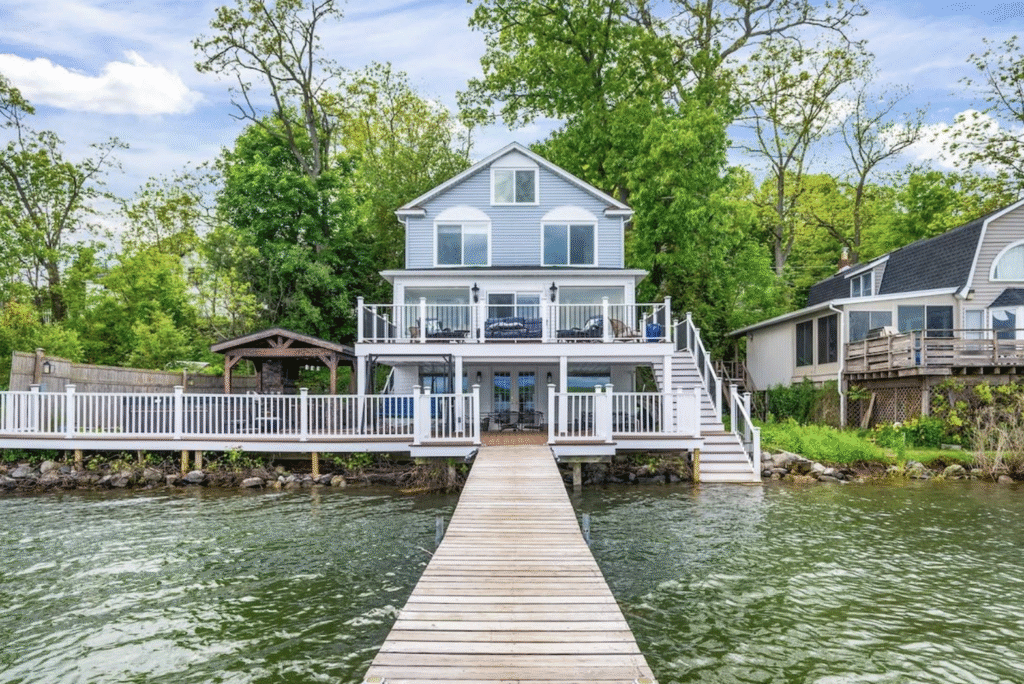
Lakefront Buyers Shop Differently
Traditional homebuyers often start with the house.
They might want four bedrooms, a two-car garage, a certain school district and a commute of less than 30 minutes.
Lakefront buyers often approach things differently.
They may start with questions like:
- Can I waterski here?
- Can I have a dock?
- How deep is the water?
- Can I keep my boat at the property?
- Is the lake clean?
- Can I swim right from my shoreline?
- Is there good fishing?
- Does the property face the sunset?
Those questions have very little to do with the house itself.
That’s why I often tell buyers that you can change the house, but you can’t change the lake.
A dated kitchen can be remodeled. A deck can be replaced. Bedrooms can sometimes be added. But if the lake is too shallow for your boat, prohibits personal watercraft or has poor water quality, no renovation is going to fix that.
That difference plays an enormous role in long-term value.
Not All Lakes Are Created Equal
This is where the assumption that “all lakefront appreciates” can get buyers into trouble.
A home on a large, clean, fully recreational lake with good boating, swimming and fishing may have a completely different appreciation profile than a similar home on a small pond with boating restrictions or recurring water-quality problems.
Lake characteristics matter
Size, depth, water quality, boating regulations, public access, fishing, shoreline conditions, water-level fluctuations and even the reputation of the lake can influence demand.
A lake with a loyal following of buyers who have been waiting years for the right property can create strong competition when a desirable home finally becomes available.
On the other hand, a lake that develops persistent algae problems, invasive weeds or severe water-level issues could see buyer demand weaken.
When evaluating the investment potential of a lake house, don’t just research the property. Research the lake.
Your Shoreline Can Be Worth More Than Your Kitchen
Imagine two nearly identical homes on the same lake.
One has 120 feet of level, sandy shoreline with deep water, a permanent dock and a western exposure overlooking spectacular sunsets.
The other has 50 feet of steep, rocky frontage with shallow, weedy water.
Those properties may be only a few hundred yards apart, but buyers can value them very differently.
That’s because lakefront real estate has its own set of value drivers.
Frontage, water depth, shoreline composition, privacy, view, exposure, dock configuration and ease of access to the water can all affect what someone is willing to pay.
When we value lakefront property, simply looking at price per square foot often misses a huge part of the equation.
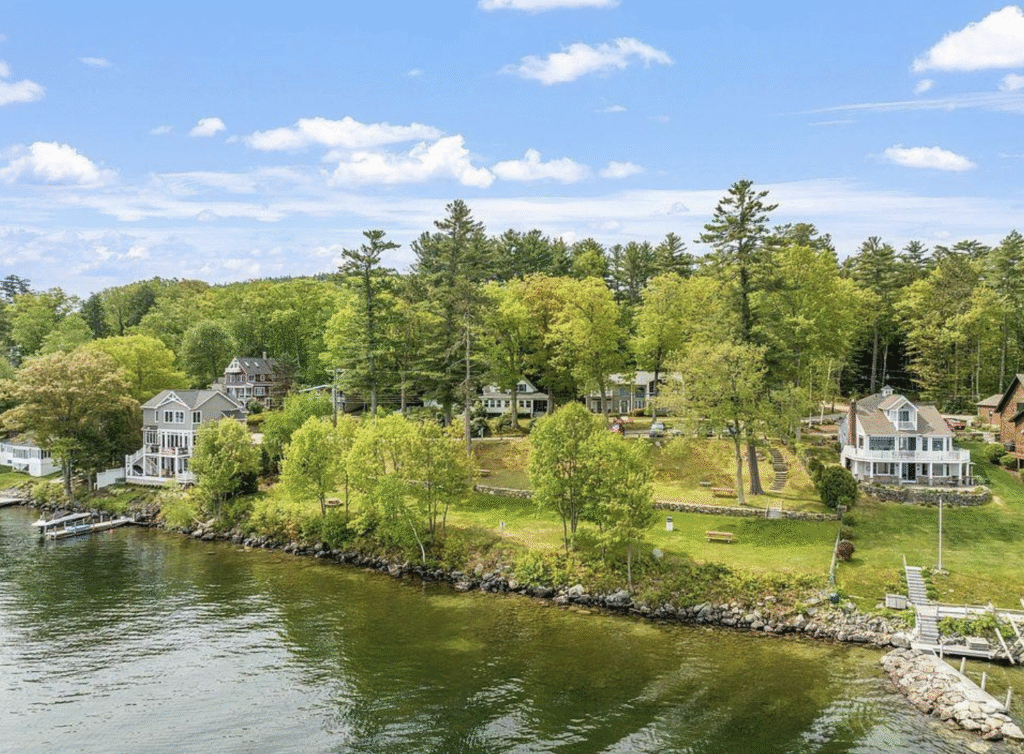
Lifestyle Creates Emotional Demand
There’s another reason lakefront homes can perform differently from traditional homes: people tend to have a strong emotional connection to them.
Buyers aren’t just imagining where the sofa will go.
They’re imagining morning coffee on the dock.
They picture their kids jumping into the lake, friends arriving by boat, sunset cruises, fishing before breakfast and summer dinners overlooking the water.
They’re buying memories that haven’t happened yet.
That emotional component can create stronger demand for the right property, especially when several buyers are competing for a limited number of homes.
I’ve always believed that when selling lakefront property, you’re not really selling the house. You’re selling the lakefront lifestyle.
The house is simply where that lifestyle happens.
But Lake Houses Come With Additional Risks
Of course, lakefront ownership isn’t without its challenges.
Waterfront properties can have additional maintenance requirements and regulatory considerations that traditional homeowners may never encounter.
Flood zones, shoreline regulations, dock permits, septic systems, erosion, private roads, lake associations and environmental restrictions can all affect ownership.
Insurance can also be more complicated, particularly when a property sits within a designated flood zone.
These issues don’t necessarily make lakefront property a bad investment. They simply make proper due diligence more important.
An informed buyer understands both the lifestyle benefits and the responsibilities that come with owning property on the water.
The Best Lakefront Investments Have Something Special
After seeing thousands of lake homes over the years, I’ve noticed that the properties that generate the strongest buyer reaction usually have something that’s difficult to duplicate.
Maybe it’s an incredible sunset view.
Maybe it has a huge sandy beach.
Maybe it sits on a quiet cove just minutes from the main body of the lake.
Maybe it has unusually deep water at the dock.
Maybe it’s one of only a handful of homes on the lake with a level lot.
Those characteristics create scarcity within scarcity.
There may be 200 homes around a lake, but perhaps only 20 have the combination of frontage, exposure, lot and water conditions that buyers really want.
Those are the properties that can become especially desirable when they hit the market.
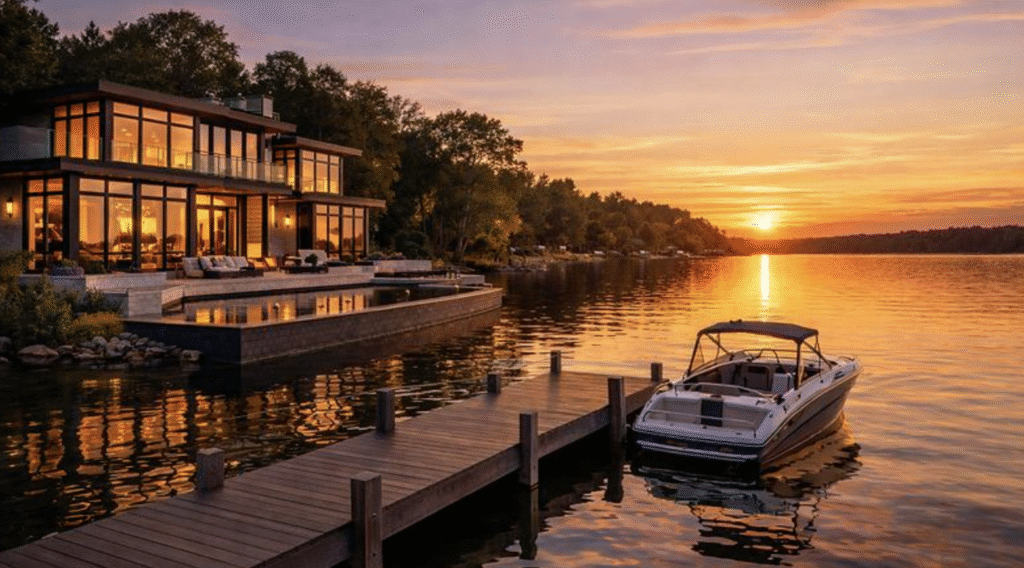
So, Is a Lake House a Better Investment?
It certainly can be.
Lakefront property has one fundamental advantage that traditional real estate can’t easily replicate: there is a finite supply of shoreline.
But simply owning property beside water doesn’t guarantee strong appreciation.
The lake matters. The shoreline matters. The view matters. The recreational opportunities matter. And perhaps most importantly, future buyers have to want what your property offers.
That’s why buying the right lakefront home requires looking beyond bedrooms, bathrooms and square footage.
Before asking whether you love the house, ask yourself a bigger question:
Do I love the lake?
Because years from now, when it’s time to sell, there’s a very good chance your future buyer will be asking exactly the same thing.
Posted by Scott Freerksen “The Lake Guy”