

When most buyers arrive at a lakefront home for the first time, they naturally want to walk through the front door. They want to see the kitchen, the primary bedroom, the bathrooms, the finishes and whether that great room really looks as big as it did in the photos.
I usually want to go the other direction.
Before I spend much time looking at the house, I want to see the lake.
After more than 20 years of helping buyers and sellers with lakefront real estate, I’ve learned that you can tell an incredible amount about a lakefront property in the first 15 minutes. And many of the things I’m looking at have absolutely nothing to do with granite countertops, hardwood floors or stainless-steel appliances.
I call it my 15-Minute Lake Test.
Why? Because when you’re buying lakefront, you’re not simply buying a house. You’re buying a shoreline, a view, water access and, most importantly, a lifestyle. A beautiful house can be renovated. Most of the things outside the house cannot.
Here’s what I’m looking at before I ever get too excited about what’s inside.

1. What’s the Walk From the House to the Water Really Like?
One of the first things I notice is the relationship between the house and the lake.
Is it a gentle, easy walk to the shoreline? Is there a steep hill? Are there 50 stairs between the house and the dock? Can you comfortably carry a cooler, paddleboard or beach bag down to the water?
That steep lot may provide an incredible view, but think about how you plan to use the property. Running up and down a long staircase 20 times during a summer Saturday can change the experience pretty quickly.
On the other hand, a level lot with easy access to the water can be incredibly valuable, particularly for families with young children, older owners or anyone who wants the lake to feel like an extension of the backyard.
2. What Does the Waterfront Actually Feel Like?
Next, I stop looking at the house altogether.
I look left. I look right. And then I look straight across the lake.
Are the neighboring homes right on top of you? Is the shoreline wooded and private? Are you looking across at undeveloped land, another neighborhood, a marina or a busy public beach?
Photos can be deceiving. A wide-angle camera can make a small waterfront area look enormous. Strategic photography can also conveniently leave the neighbor’s dock out of the picture.
Standing at the shoreline tells you the real story.
Privacy is one of those lakefront features that is extremely difficult to create later.
3. What’s Happening Under the Water?
This is something many first-time lake buyers completely overlook.
What does the bottom look like?
Is it sandy? Rocky? Muddy? Weedy?
And perhaps more importantly, how deep is the water?
If your dream is to keep a ski boat at the dock, three feet of water may be a problem. If you have young children and want a gradual sandy entry for swimming, shallow water might be exactly what you’re looking for.
Water depth can also change seasonally, particularly on lakes where water levels are controlled or drawn down. Buyers should understand not only what the water looks like on showing day, but what it looks like throughout the year.
As I often tell buyers:
“Don’t just look at the lake. Think about how you’re actually going to use it.”
4. I Look Closely at the Dock
The dock isn’t just a place to tie up the boat. At many lake homes, it becomes the center of activity.
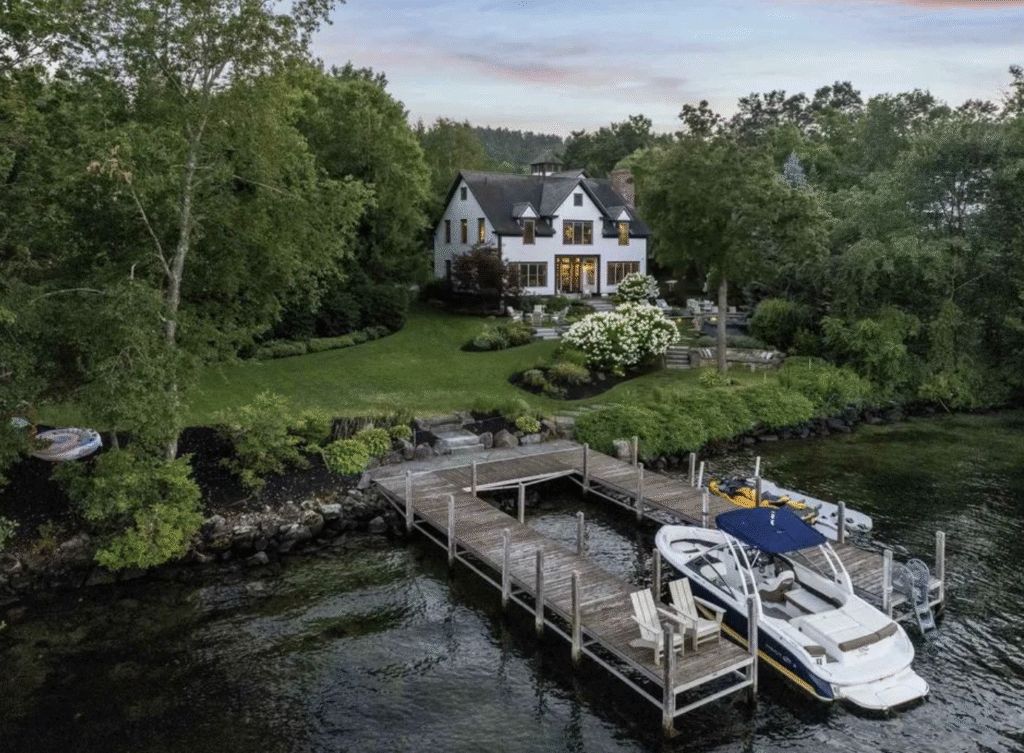
I want to know whether it’s permitted, what condition it’s in, whether there’s electricity, how deep the water is at the end and whether it can accommodate the buyer’s boat.
Can you add a boat lift? Can you make the dock larger? Can you replace it someday?
Those answers can depend on the lake, municipality, state regulations and lake association rules. Never assume that because the current owner has a dock, you can automatically replace it with whatever you want.
We’ve covered this issue before on the Lake Life Blog because dock and shoreline rights can have a major impact on how you enjoy a property. Existing structures and future improvements should always be verified during due diligence.
5. Which Way Does the Property Face?
This one surprises buyers.
Sun exposure matters.
A west-facing property may deliver those spectacular sunsets you’ve imagined enjoying with a drink on the dock. An eastern exposure might give you beautiful morning sun and cooler late afternoons.
Neither is necessarily better. It depends on your lifestyle.
But buyers often spend months searching for a lake house without ever thinking about where the sun rises and sets relative to the property.
I also pay attention to prevailing winds. An exposed shoreline can get significantly more wave action than a protected cove. That can affect swimming, docking and even how comfortable it is sitting by the water.
6. How Much Usable Waterfront Do You Really Have?
A listing might advertise 100 feet of lake frontage, but that doesn’t necessarily mean you have 100 feet of usable shoreline.
Part of it might be heavily vegetated. There could be wetlands. The shoreline might be steep, rocky or eroding.
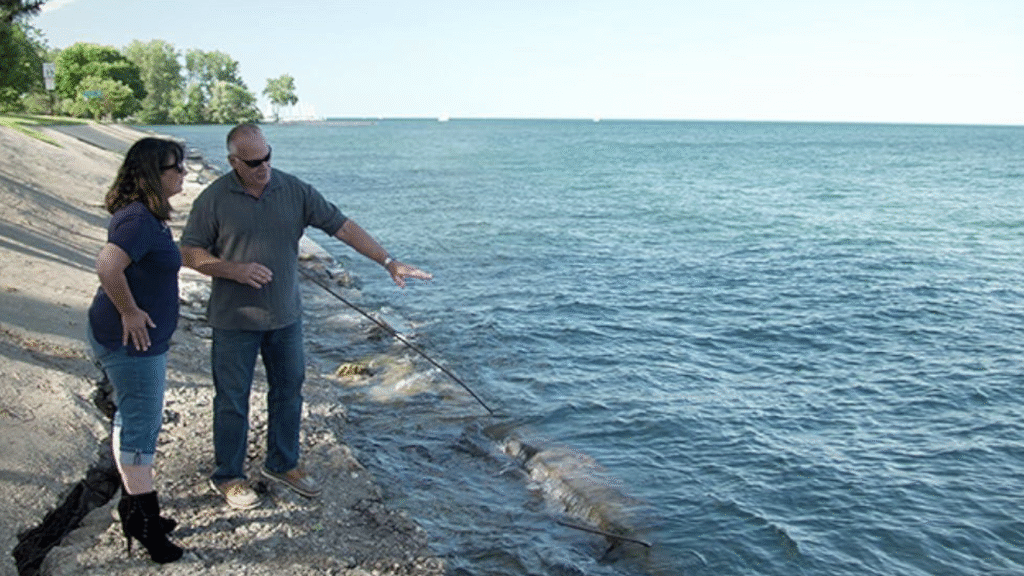
I look for signs of erosion, exposed roots, failing retaining walls and old shoreline stabilization.
These aren’t necessarily deal breakers. They’re simply things you want to understand before buying, not after.
7. What’s Going On Around the Property?
I also listen.
Jet skis? Boat traffic? Road noise? Music from a nearby restaurant? Kids playing across the cove?
Again, none of those things are automatically bad.
Some buyers want action. They want a fully recreational lake where they can waterski, wakeboard and cruise to friends’ houses.
Others picture coffee on the dock at 6:30 in the morning with nothing but loons and fishing boats going by.
The important question isn’t whether a lake is “good.”
It’s whether the lake is good for you.

8. Can You Actually Do What You’re Dreaming About?
This may be the most important part of my 15-minute evaluation.
When buyers describe their dream lake house, I listen carefully.
“We want a pontoon boat.”
“We want to build a bigger dock.”
“We’d love to rent it when we’re not using it.”
“We eventually want to add a garage.”
“We want to clear some trees so we can see the water better.”
Every one of those statements creates another question.
Lake associations, municipalities, conservation authorities, state agencies, deed restrictions and zoning regulations can all affect what you can do with a lakefront property. Waterfront due diligence often extends beyond a normal home inspection to docks, shoreline conditions, septic systems, flood exposure, easements and water rights.
The time to investigate those issues is before you buy.
Then I’ll Look at the House
Once I’ve looked at all of that, I’m happy to go inside.
Of course the condition of the house matters. You still need to evaluate the roof, foundation, heating system, electrical, plumbing, septic and everything else you would inspect with a conventional home.
But here’s the difference
You can replace a kitchen. You can remodel a bathroom. You can add hardwood floors.
You can’t move the house to the other side of the lake because you wanted sunsets.
You can’t easily turn a muddy shoreline into a sandy beach.
You can’t make a tiny quiet lake suddenly allow waterskiing.
And you can’t manufacture another 100 feet of waterfront.
That’s why I believe the best lakefront buyers learn to evaluate the property from the water back toward the house, rather than from the house toward the water.
Buy the Lifestyle First
When I walk a lakefront property with a buyer, I’m not trying to decide whether it’s a beautiful house.
I’m trying to answer a much bigger question:
Will owning this property allow this buyer to live the lakefront lifestyle they’ve been imagining?
That’s the real 15-Minute Lake Test.
And sometimes, I can tell within those first few minutes that we’ve found something special.
Other times, I can see reasons to slow down and investigate further.
Either way, those first 15 minutes at the shoreline can tell you more about a lakefront property than an hour spent admiring the kitchen.
Because when you’re buying lakefront, the house is only part of what you’re buying. The lake is the reason you’re there
Posted by Scott Freerksen “The Lake Guy”