

Summer makes it easy to fall in love with a lake house. The trees frame the water, the deck feels secluded, and a boat waiting at the dock practically invites you aboard. You can already picture your family spending weekends there.
But what happens when the leaves come down?
For lakefront buyers, late fall offers a valuable opportunity to see a property from a different perspective. The landscape opens up, neighboring homes become more visible, and details that were easy to overlook in July may deserve a closer look.
That doesn’t make a property less desirable. It helps you understand what you’re buying and whether it delivers the lakefront lifestyle you have in mind.
Before you put your search on hold until spring, here’s what a late-fall showing can help you discover.
How Private Is Your Private Retreat?
A backyard surrounded by leafy trees can feel wonderfully secluded. Once those trees are bare, you might discover a clear view of the neighbor’s deck, an overlooked road, or a home across a narrow cove.
For some buyers, that’s perfectly fine. For others, privacy is one of the main reasons they’re buying a lake house.
During your visit, spend time where you would actually relax. Sit on the deck. Stand outside the primary bedroom. Walk down to the waterfront seating area.
Then consider the view in both directions. If you can see directly into a neighboring home, its occupants may have a similar view of yours.
Ask whether the landscaping includes evergreens that provide screening throughout the year. If you’re considering adding vegetation, investigate what’s suitable and permitted before assuming you can create the privacy you want.
The goal is to understand how the property feels across the seasons.
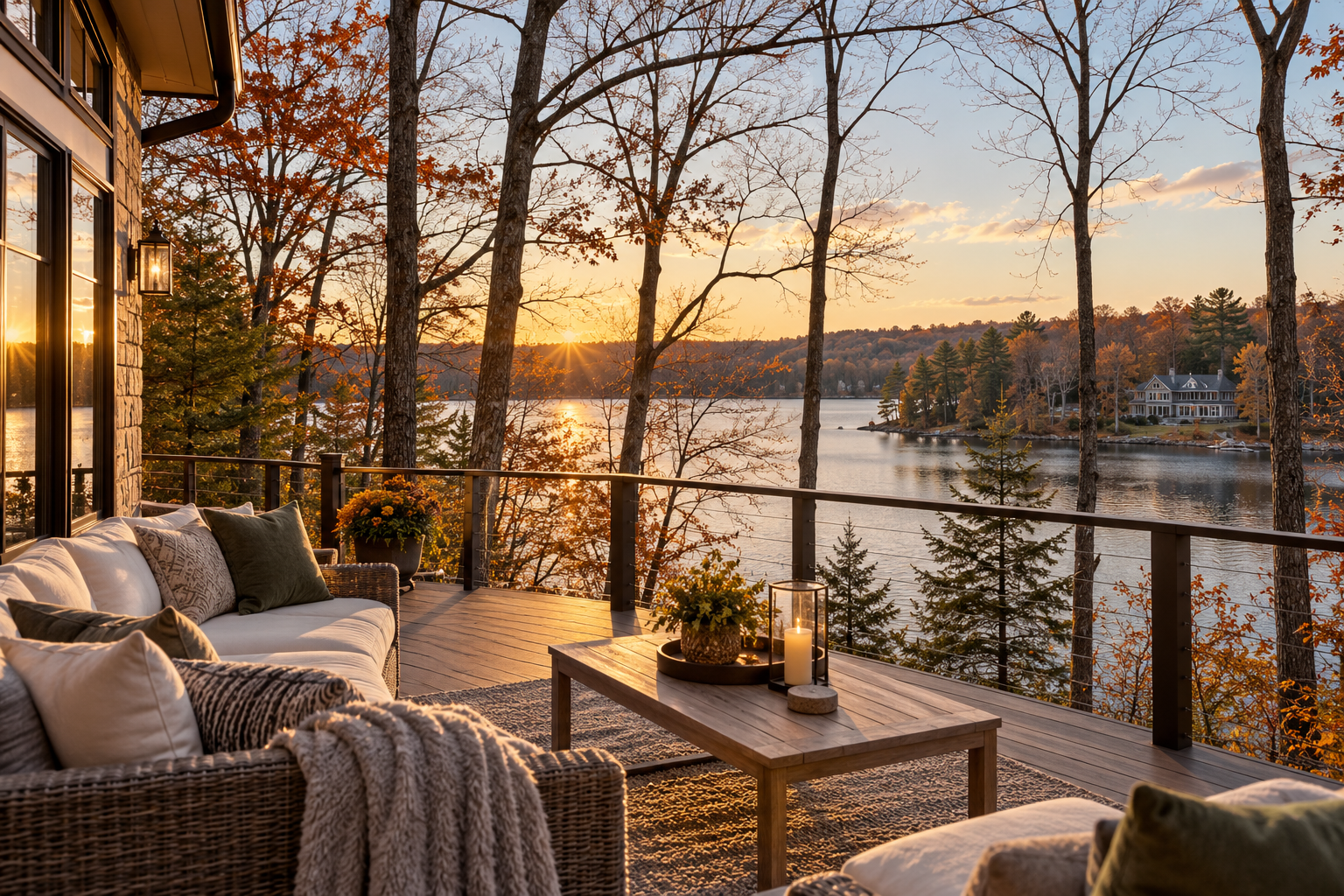
Is That Beautiful Water View Seasonal?
Fall can reveal a pleasant surprise: a water view that becomes significantly wider once the leaves drop.
A home with a filtered summer view may offer a broad lake panorama from November through early spring. If you plan to live there year-round, that could be a meaningful benefit.
The reverse deserves consideration, too. A spectacular view during a late-fall showing may become much more limited when foliage returns.
Ask for photographs taken during different seasons, ideally from the same locations. You want to see the view from the living room, kitchen, primary bedroom, and deck, rather than relying entirely on aerial photographs.
Think about where you’ll spend your time. A dramatic view from the far corner of the yard may matter less than the view from the chair where you’ll drink your morning coffee.
What Does the Shoreline Tell You?
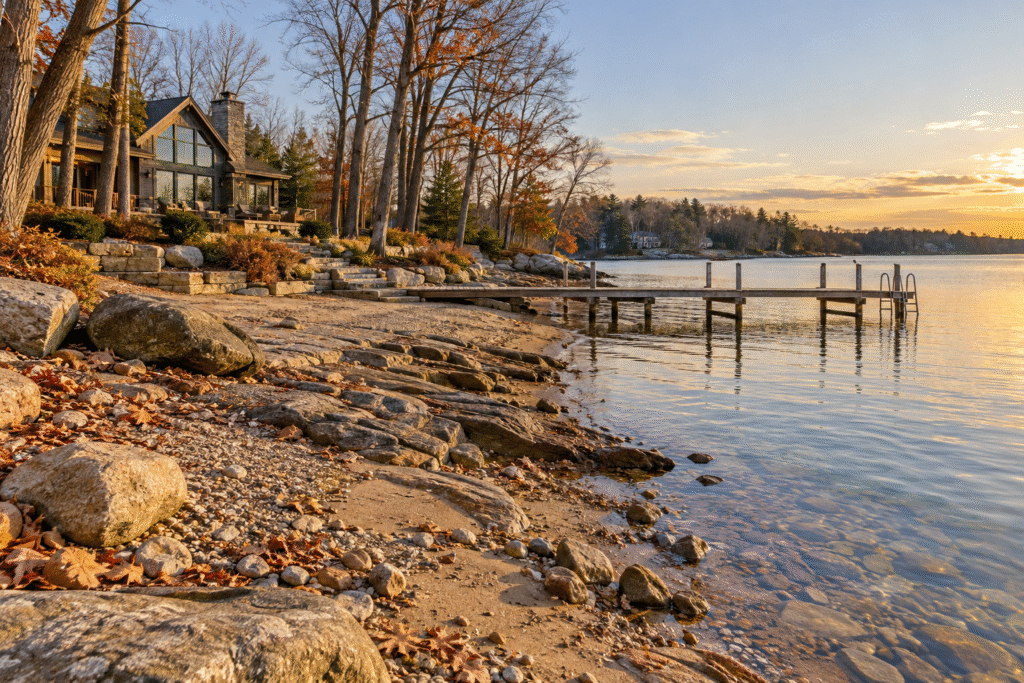
On lakes with a seasonal drawdown, lower water may expose areas of shoreline and lake bottom that are normally submerged. Winter drawdowns are a common management practice on some recreational lakes, including lakes in Massachusetts, although their extent varies.
For a buyer, that creates questions worth exploring.
What does the exposed bottom look like? How does the land slope toward the water? Where does the dock normally sit, and how does its location relate to deeper water?
Observe from safe, authorized areas and ask the seller to explain how the waterfront functions during boating season.
A low-water visit alone cannot tell you the normal swimming depth, summer plant growth, or whether your boat will have adequate clearance. Likewise, exposed shoreline does not automatically indicate a problem.
Request summer photographs and ask about typical water levels, drawdown schedules, and any history of delayed refill. Confirm available information with the organization responsible for managing the lake.
You’re looking for a clear picture of how the waterfront will work when you want to use it.
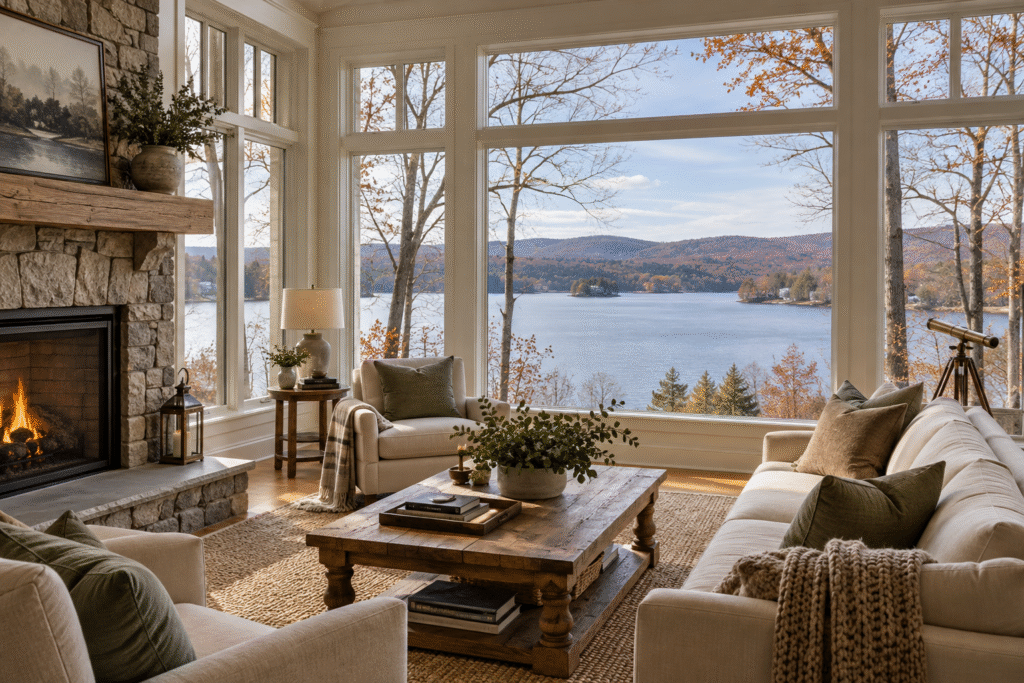
Will Your Boat Work Here?
A dock is an appealing feature, but buyers need to look beyond its appearance.
If boating is central to your plans, ask specific questions about the boat you intend to own. What is the water depth at the dock during normal boating conditions? What happens during lower-water periods? Is the route from the dock to open water suitable?
If the dock has already been removed for winter, request photographs showing its installed configuration. Ask who handles installation and removal, where the sections are stored, and what the owner has typically paid for that work.
Also verify the applicable dock permissions and requirements with the responsible authority.
Finding out how the waterfront accommodates your boat is far better than discovering the limitations after you’ve moved in.
How Does the House Feel on a Chilly Day?
A cool-weather showing gives you another perspective on the home itself.
Do the rooms feel comfortable? Is the lakeside living room inviting when the wind picks up? Does the beautiful sunroom have heat, or is it intended for use during milder weather?

These details matter if your dream includes Thanksgiving at the lake, winter weekends, or eventually making the property your full-time residence.
Ask for available heating bills and details about insulation, heating equipment, and any seasonal shutdown procedures. Have your home inspector evaluate the relevant systems and explain what requires further investigation.
A showing provides useful observations. The inspection helps you understand their significance.
Look at the Route to the Water
Without summer landscaping drawing your attention, it can be easier to focus on the practical trip between the house and shoreline.
Walk that route carefully. Consider the slope, steps, handrails, lighting, and places where wet leaves collect.
Now picture yourself carrying a cooler, helping a grandchild, or bringing supplies down to the boat. Would the route feel comfortable for everyone who will regularly use the property?
A hillside setting may deliver an incredible view. A flatter lot may make frequent trips to the dock easier. Your best choice depends on how you plan to enjoy the lake.
Ask What This Visit Cannot Show You
A quiet afternoon in November won’t tell you how busy the lake becomes on a sunny holiday weekend.
It also won’t fully reveal summer swimming conditions, peak boating activity, or the neighborhood’s seasonal rhythm.
Ask about those experiences directly. Review summer photos and videos, speak with knowledgeable local sources, and arrange another visit when practical.
Every season gives you part of the story. Thoughtful questions help fill in the rest.
Buy With the Whole Year in Mind
You don’t have to wait for perfect summer weather to find the right lake house. A late-fall visit can help you evaluate privacy, views, comfort, and waterfront access with a clearer sense of everyday ownership.
Bring your wish list, take your time, and look beyond the listing photographs.
The right property should fit the life you want to create there, whether that means summer boating, colorful autumn weekends, or watching the water from a warm living room in January.
Ready to find your lakefront fit? Visit LakefrontLiving.com to explore direct lakefront homes and connect with a local lakefront specialist who can help you ask the right questions before you buy.
Posted by Scott Freerksen “The Lake Guy”