

There’s always that moment in the fall when you wonder whether you can squeeze in one more ride. The lake is quieter, the shoreline is showing its autumn colors, and your personal watercraft is still ready for adventure. But once that final ride is behind you, what happens next can make a big difference when spring arrives.
Putting your PWC away involves more than pulling it onto the trailer and throwing on a cover. Proper winterization helps protect against freeze damage, corrosion, fuel problems, and a battery that refuses to cooperate on the first beautiful day of the season. Whether you own a Sea-Doo, Yamaha WaveRunner, or Kawasaki Jet Ski, a little attention now can help preserve the lake days you’re already looking forward to.
Start With the Instructions for Your Exact Model
Before buying supplies or following an online tutorial, find the owner’s manual for your PWC’s model and year. Winterization procedures vary, particularly between older two-stroke machines and newer four-stroke models.
Use this article as your planning guide, then follow your manual for the actual service sequence, approved products, and operating limits. If you plan to have a dealer handle the mechanical work, schedule early enough to finish before freezing temperatures arrive.
You can still take care of cleaning, organizing equipment, and preparing the storage space yourself. The goal is to have every part of the job covered before the weather makes the decision for you.
Give It a Thorough Cleaning and Inspection
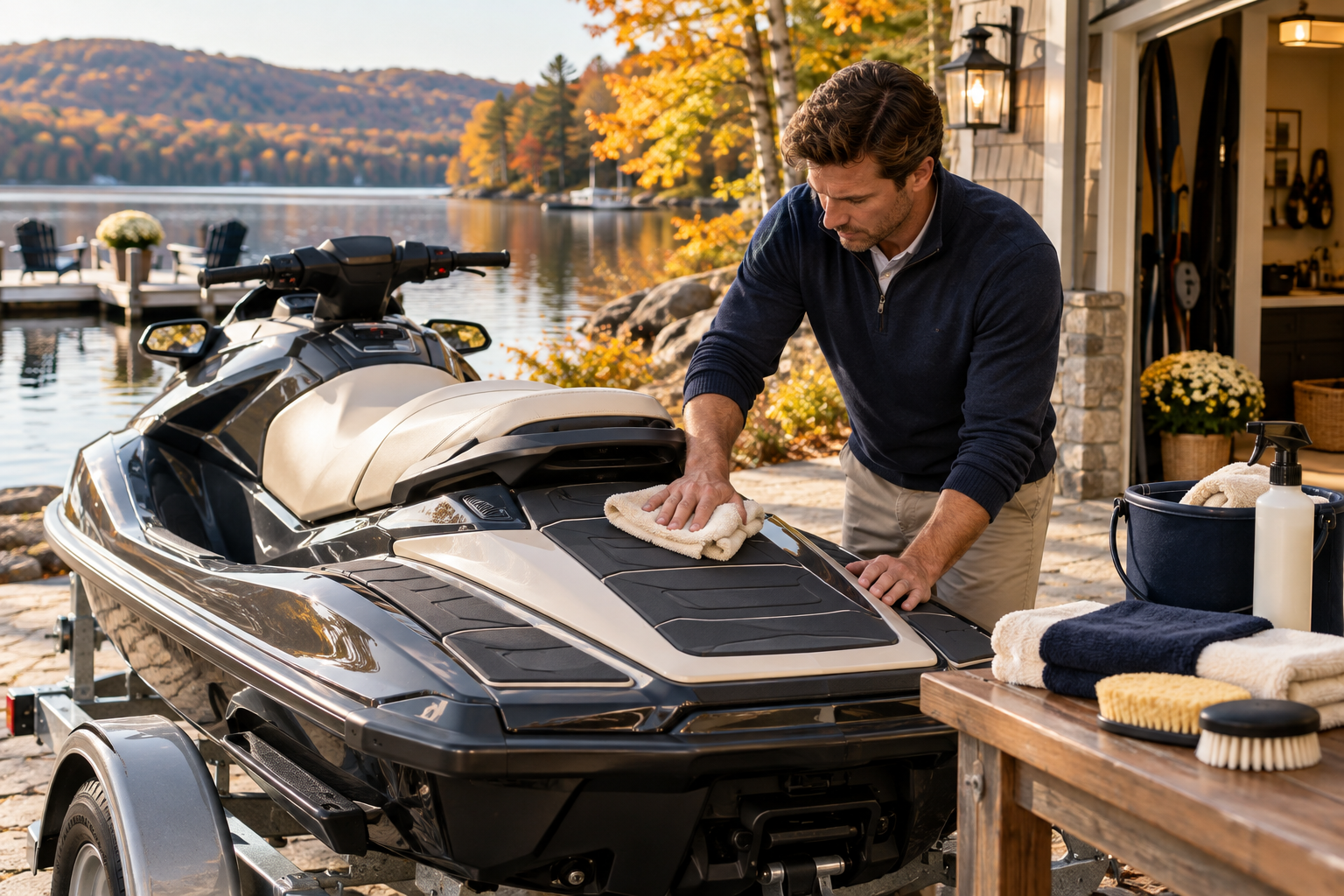
After a summer of riding, your PWC deserves more than a quick rinse. Wash the hull and deck with a suitable marine cleaner, paying attention to footwells, storage compartments, and places where grime collects.
Remove towels, life jackets, ropes, and anything else that could hold moisture. Clean those items separately and let everything dry before packing it away.
With the engine off and the safety lanyard removed, visually check the intake grate and jet pump area for weeds or debris. Look over the hull for damage, and make a note of anything that needs professional attention. Fall is a good time to address that problem you’ve been meaning to investigate since July. Yamaha’s maintenance guidance emphasizes cleaning, hull inspection, and checking the pump area for debris.
Treat the Fuel Before Storage
Fuel deserves attention before your machine sits unused for months. Add the manufacturer-recommended stabilizer to fresh fuel, following the product label for the correct amount. Follow your manual’s recommended storage fuel level, and avoid overfilling.
The treated fuel also needs to reach the fuel system. Complete the prescribed circulation procedure before finishing the mechanical winterization. Simply pouring stabilizer into the tank after everything else is done may leave untreated fuel elsewhere in the system. Sea-Doo includes fuel stabilization and circulation in its storage guidance.
Think of this as preparing for the first ride of next year. It’s much easier to handle now than to troubleshoot a starting problem while everyone else is heading down to the dock.
Make Freeze Protection the Priority
This is the step that deserves your closest attention. Water remaining in vulnerable components can freeze and cause expensive damage.
Cooling systems differ. Many modern Sea-Doo models use closed-loop engine cooling, while other machines have different arrangements. Having coolant in the engine does not mean every water-containing component is protected. Sea-Doo specifically identifies draining the exhaust system as part of winter preparation.
Follow your manual’s instructions for flushing, draining, and any additional freeze protection. Don’t assume that a brief engine start clears every passage, or that pouring antifreeze into a flush connection is appropriate for your machine.
When flushing, follow the required engine-and-water sequence and the stated time limits. For the Sea-Doo procedure referenced here, the engine starts before the water is turned on, and the water is shut off before the engine stops. Your model’s manual should govern the procedure you use.
Complete the Engine’s Storage Maintenance
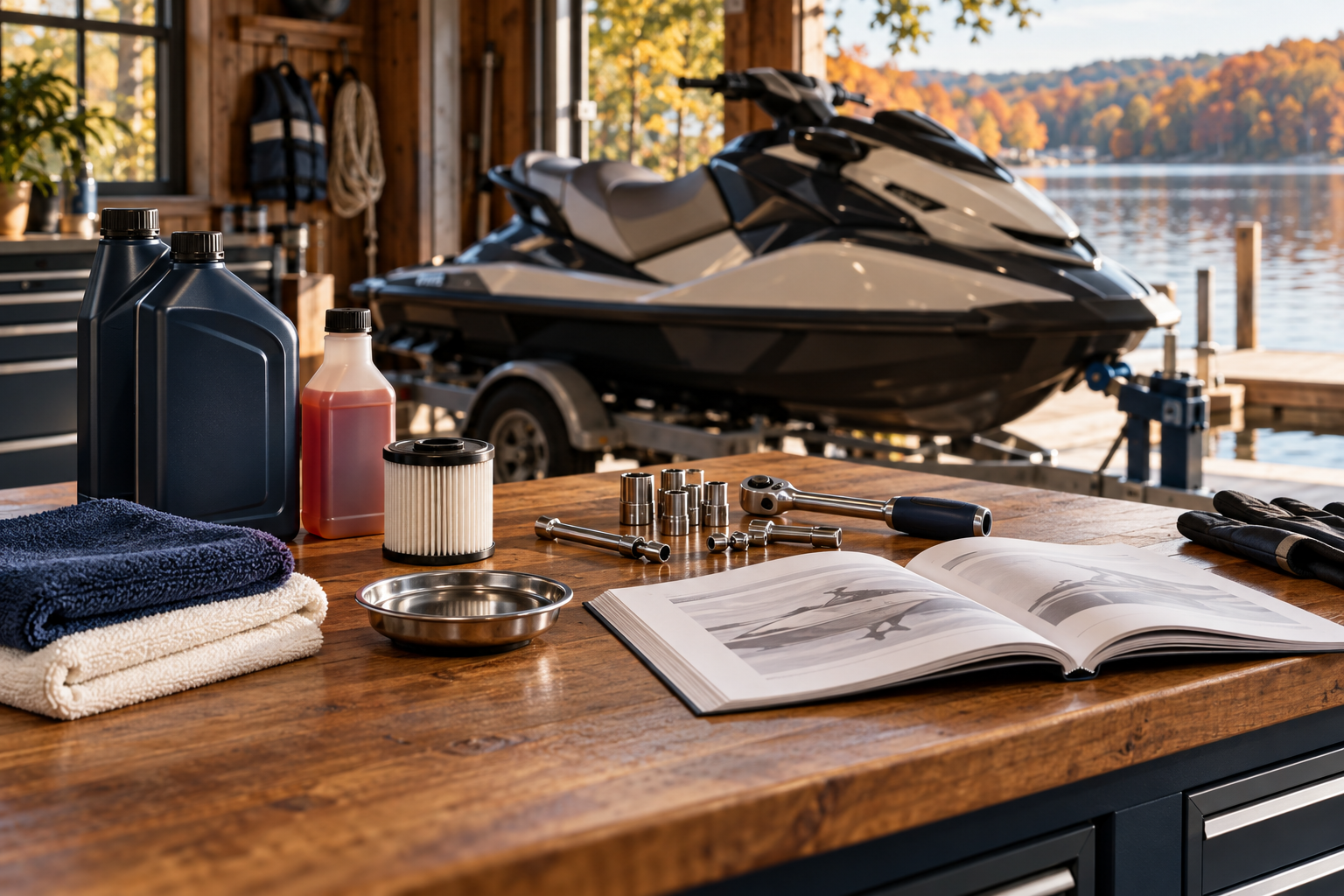
For a four-stroke PWC, check the oil and filter requirements for seasonal storage. Yamaha recommends changing engine oil before putting the machine away, rather than waiting until spring. Older two-stroke machines have different maintenance needs, so use the correct instructions for your engine.
Also check the manufacturer’s internal engine protection procedure. This may involve fogging or another prescribed lubrication process. The product, application method, and steps vary, so avoid treating a tutorial for another model as interchangeable with yours. Yamaha includes fogging in its end-of-season guidance.
If this part feels beyond your comfort level, have a qualified technician complete it. A service receipt and a record of what was done will also make next year’s maintenance easier to track.
Give the Battery Its Own Winter Plan
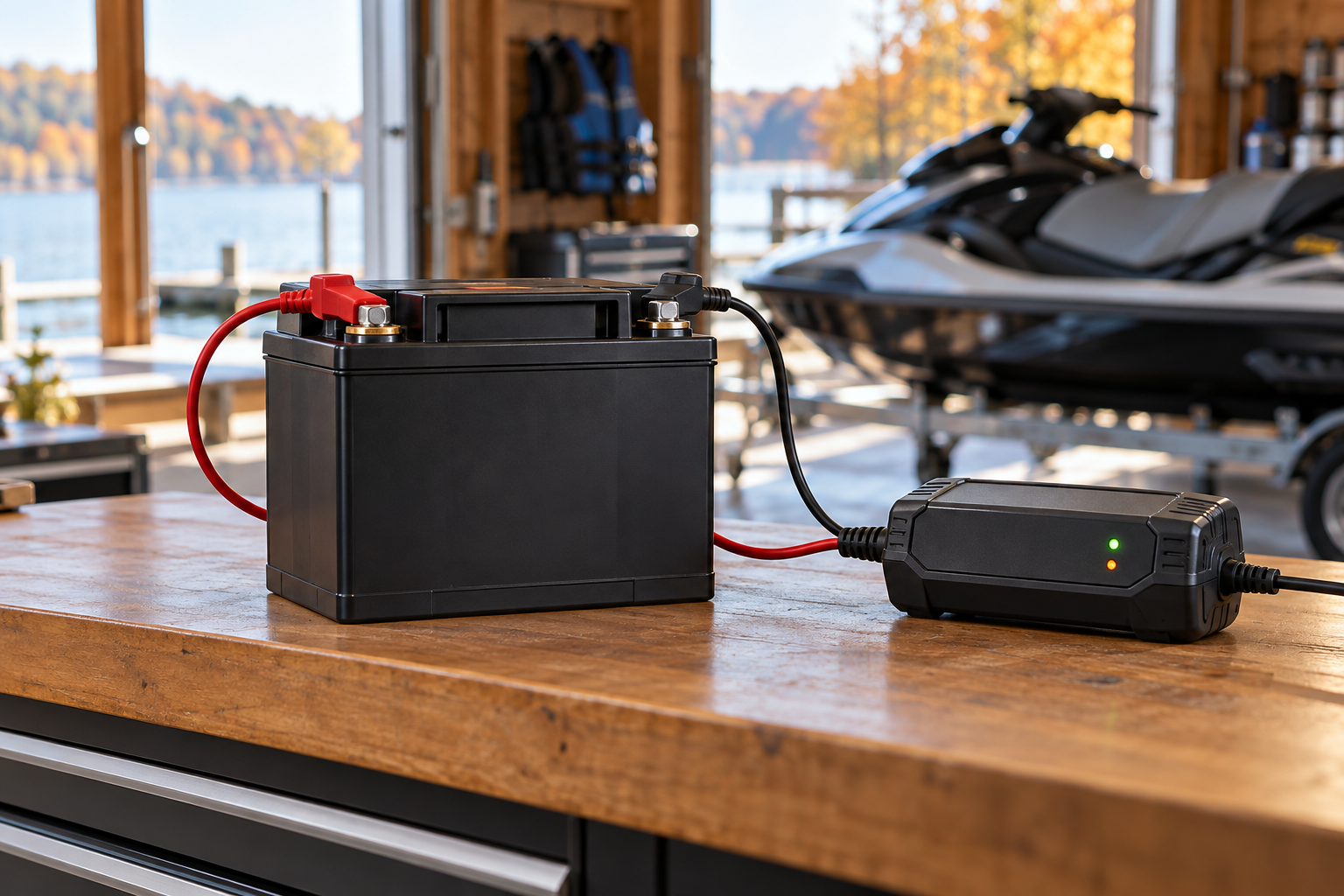
A battery that worked perfectly in September can still need attention during months of storage. Follow your manual’s disconnecting and removal instructions, then store it in an appropriate cool, dry, ventilated location.
Use a battery maintainer compatible with your battery’s chemistry and follow both sets of instructions. Yamaha recommends fully charging the battery before storage and checking its charge during the offseason.
Put a reminder on your calendar. Battery care is easy to forget once the PWC is covered and the holidays take over.
Choose the Storage Space Carefully
A clean, dry, secure storage area makes winter care easier. If the PWC will stay outside, choose a location where you can check on it and where runoff won’t collect around the trailer.
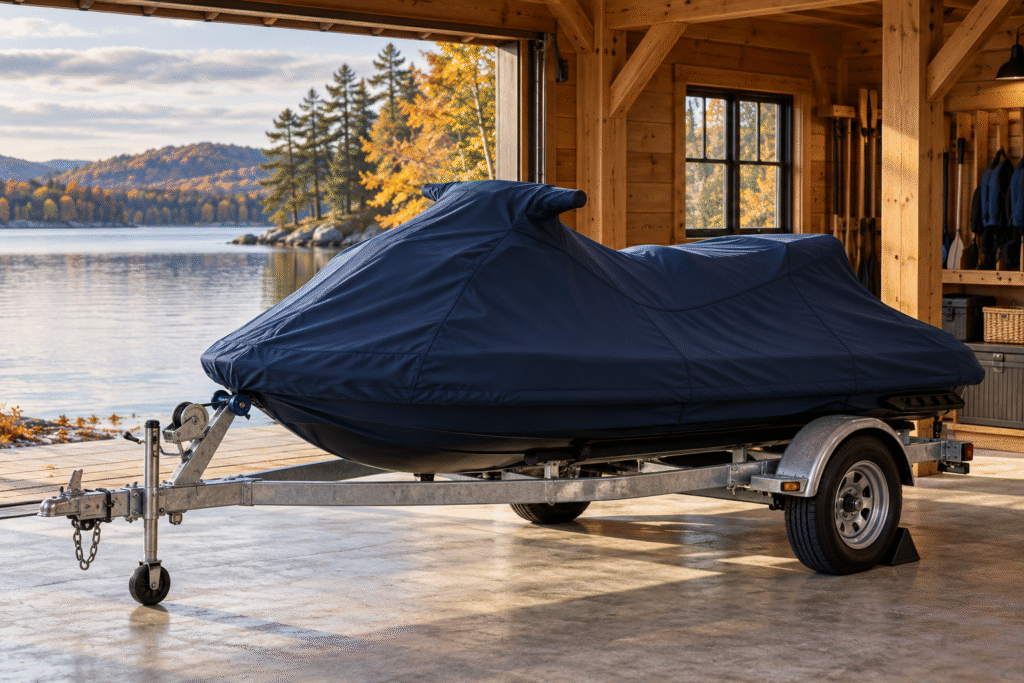
Cover the machine only after it has dried thoroughly. Sea-Doo recommends a breathable cover and cautions against non-breathable wrapping that can encourage mold.
Keep the cover secure, watch for pooled water or snow, and inspect the storage area periodically. If you use a professional storage facility, ask what its winterization service includes and what you’ll need to do before collecting the machine in spring.
Remember the Trailer and the Spring Checklist
Before parking the trailer, check its tires, winch strap, lights, safety chains, and bunks. Arrange any needed bearing service, and follow the trailer manufacturer’s storage recommendations. Yamaha includes these trailer checks in its maintenance guidance.
Finally, write down the date, engine hours, service completed, and anything still needed. Leave yourself a clear spring reminder to follow the recommissioning procedure, reinstall required equipment, and check the drain plugs before launching.
Winterizing may not be your favorite lake activity, but it helps protect the ones that are. When the warm weather returns, you’ll want to be planning your first ride, enjoying the shoreline, and making new memories. Taking care of your PWC now helps keep that first beautiful lake day focused on fun.
Posted by Scott Freerksen “The Lake Guy”