

Congratulations, you bought your first pontoon boat. Now comes the fun part.
If you walk into a marine store right after buying a boat, you can easily convince yourself that you need $3,000 worth of accessories before your first day on the water. Cup holders, floating coolers, underwater lights, grills, upgraded speakers, inflatable islands, fancy dock lines. The list is endless.
The reality is that you only need a handful of things to get started. Some are required for safety, some protect your new investment, and others simply make a day on the lake much more enjoyable.
Before you start buying the fun stuff, here are the first things I would put on the shopping list for any new pontoon owner.
1. Start With the Safety Equipment
This isn’t the exciting part of pontoon ownership, but it needs to come first.
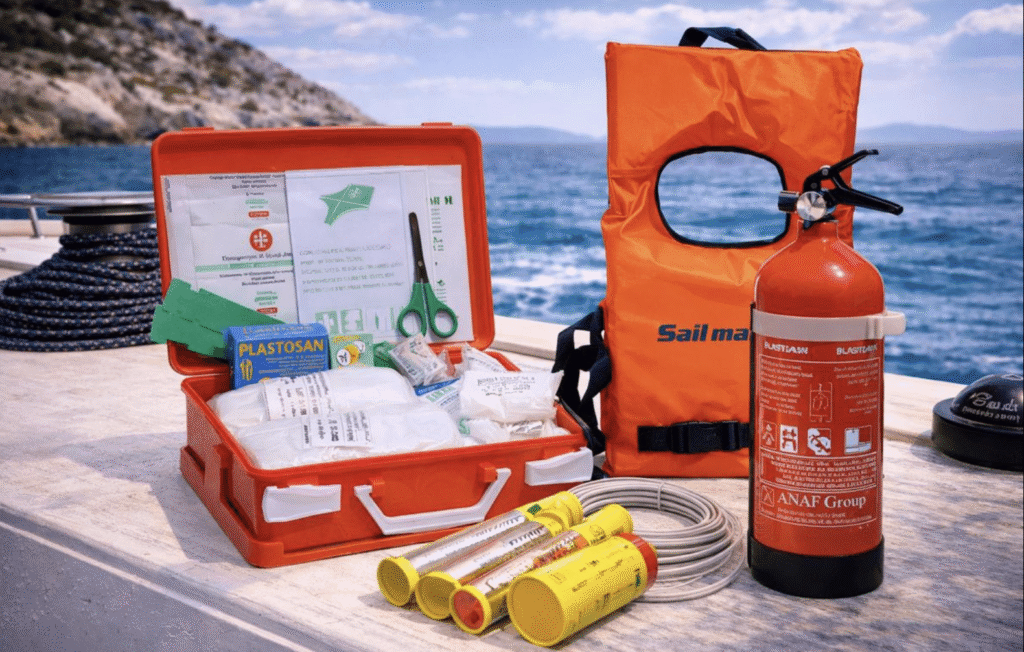
Make sure you have a properly sized, U.S. Coast Guard-approved life jacket for everyone who will regularly be on the boat. Don’t just buy the cheapest package of orange life jackets and stuff them under a seat. Comfortable life jackets are much more likely to actually be worn, especially by kids.
You’ll also want to make sure your boat has the required safety equipment for your state and the waters where you’ll be boating. Depending on the boat and location, that can include a throwable flotation device, fire extinguisher, sound-producing device such as a horn or whistle, navigation lights and visual distress signals.
A waterproof first-aid kit is another inexpensive item that you’ll be glad to have when someone steps on a fishing hook or cuts a finger climbing back aboard.
2. Good Dock Lines
Pontoon boats are big, relatively heavy and have a lot of surface area for the wind to grab. That makes good dock lines much more important than many first-time boaters realize.
I’d recommend having at least four quality dock lines onboard, plus an extra one or two.
You’ll use them constantly. They aren’t just for your home dock. You’ll need them when stopping at a waterfront restaurant, visiting friends, fueling up or tying off somewhere for a swim.
Pre-spliced dock lines with a loop on one end make life much easier.
One little pontoon lesson you’ll learn quickly: the wind always seems to pick up exactly when you’re trying to dock.
3. Several Good Fenders
Fenders are basically insurance for your pontoon’s exterior.
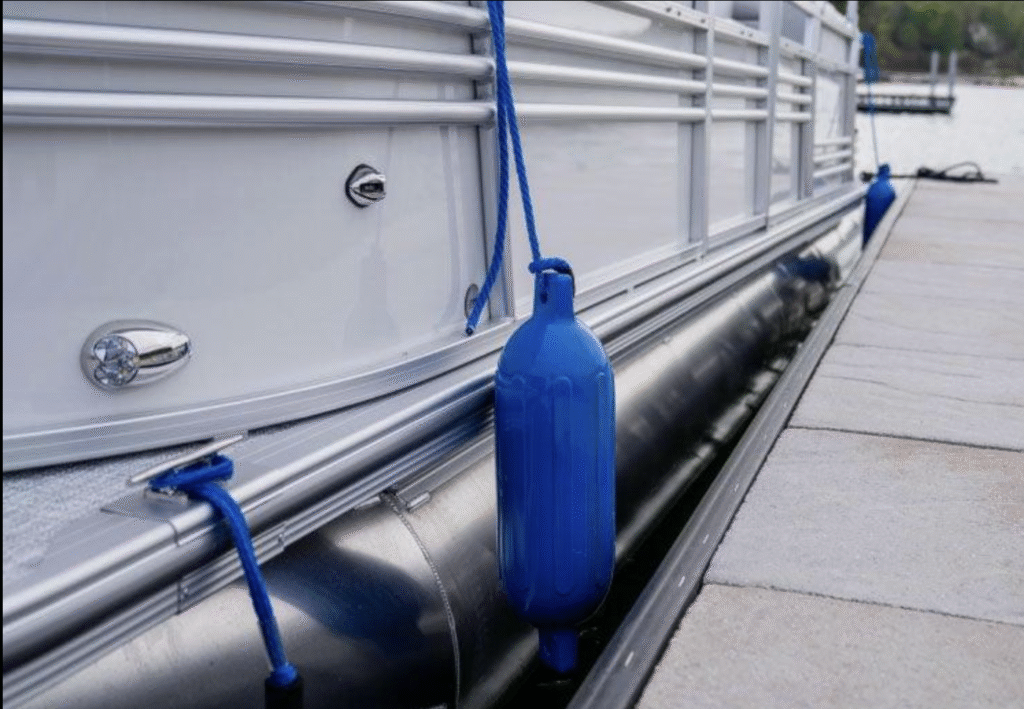
Get at least three or four quality fenders that are large enough for your boat. Smaller fenders may look fine sitting at the dock, but they don’t offer much protection when your pontoon is bouncing against a dock because of waves or boat traffic.
I also like adjustable fender hangers or clips. They allow you to quickly change the height of the fender depending on the dock.
Your pontoon’s fencing, panels and rails can be expensive to repair. Spending a little extra on good fenders is money well spent.
4. A Quality Anchor
One of the best parts of owning a pontoon is finding a quiet cove, dropping anchor and spending a few hours swimming, eating and relaxing.
Unfortunately, the tiny anchor that sometimes comes with a boat may not be enough.
The correct anchor depends on your lake bottom, boat size and typical conditions. Mud, sand, weeds and rocky bottoms can require different approaches.
Just as important as the anchor is having enough anchor line. A common first-time mistake is dropping an anchor almost straight below the boat and wondering why you’re still drifting.
Ask your local marina what type of anchor works best on your particular lake. Local knowledge is extremely valuable here.
5. A Boat Hook
For something so simple, a boat hook becomes one of the most frequently used pieces of equipment onboard.
You’ll use it to grab dock lines, push away from docks, retrieve floating items and reach things that are just slightly too far away.
A telescoping boat hook is inexpensive, easy to store and particularly helpful when docking a pontoon in windy conditions.
Buy one before you need one.
6. A Good Cooler
Now we can start getting into the fun stuff.
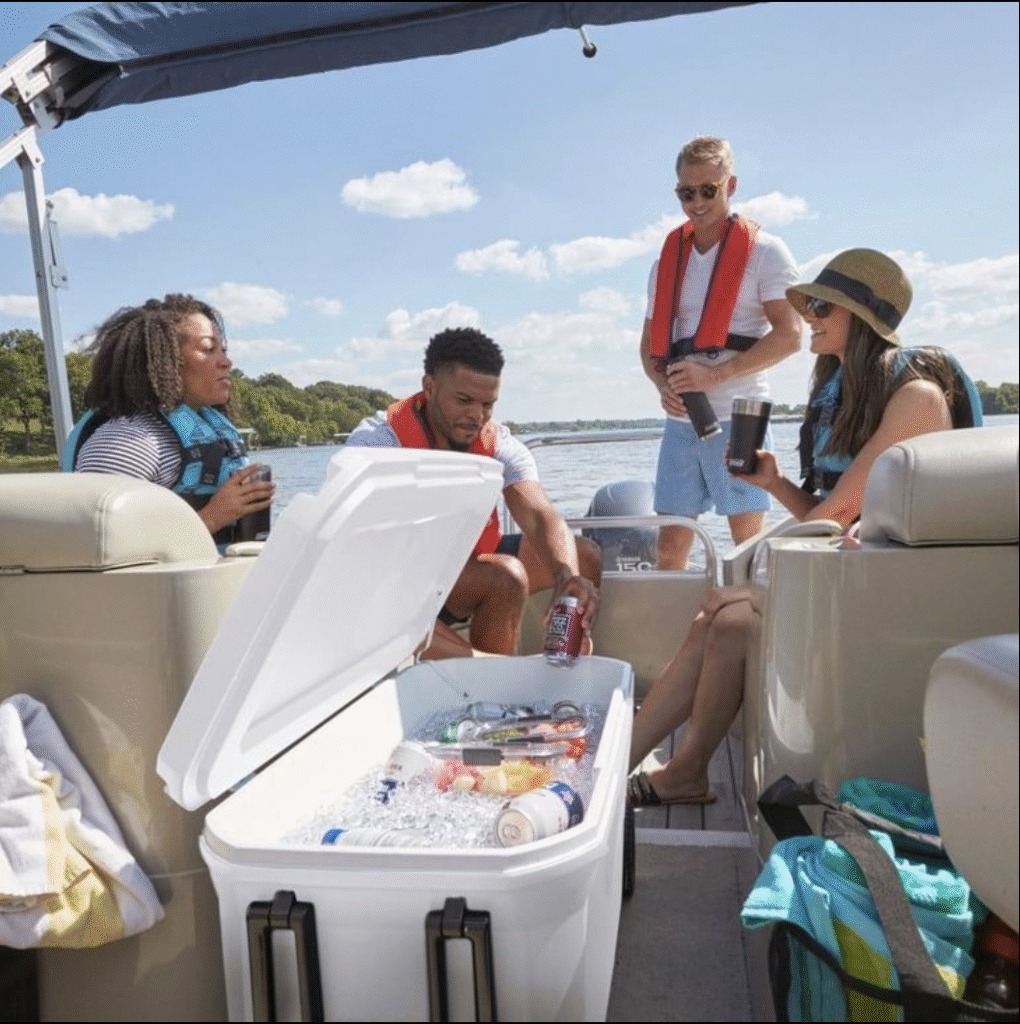
Even if your pontoon has built-in coolers, I still like having a quality portable cooler onboard. You can load it at the house, carry it directly onto the boat and take it off at the end of the day.
Look for something that fits comfortably underneath a seat or in a designated storage area.
And here’s a good pontoon rule: buy a slightly bigger cooler than you think you need. Once you add drinks, sandwiches, fruit, snacks and ice for six or eight people, cooler space disappears quickly.
7. A Waterproof Storage Box or Dry Bag
Phones, wallets, keys and boating don’t always mix well.
Keep a waterproof dry bag or small waterproof storage container onboard for anything that absolutely needs to stay dry.
It’s especially useful when you’re anchored and everyone starts swimming. Wet kids climbing aboard have an amazing ability to soak things that seemed safely out of the way.
It’s also smart to keep your boat registration and other important paperwork protected in a waterproof pouch.
8. Towels, Sunscreen and a Boat Trash Can
These aren’t glamorous purchases, but you’ll use them every single trip.
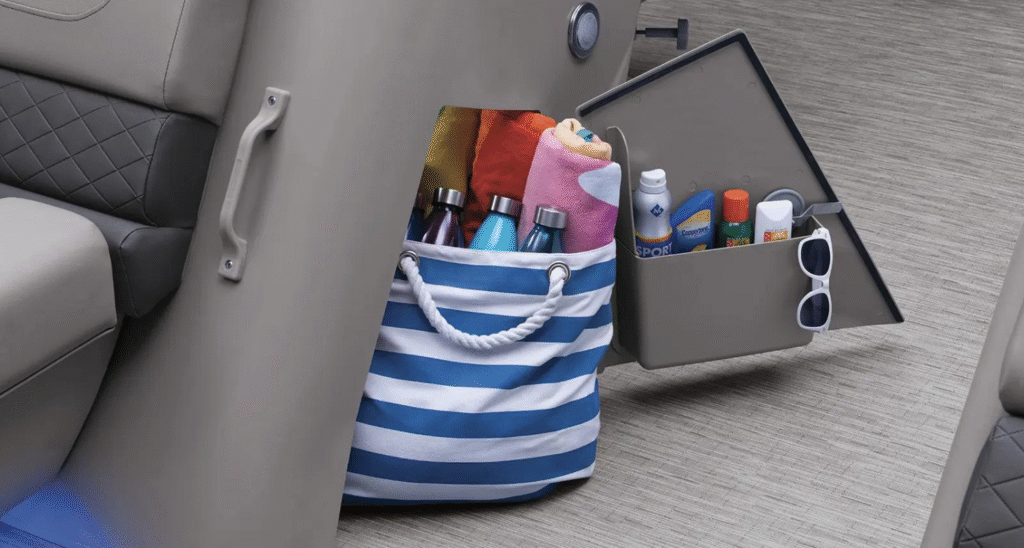
Keep a dedicated supply of boat towels onboard instead of constantly bringing towels back and forth from the house. The same goes for sunscreen.
A small collapsible trash container is another great pontoon accessory. Without one, wrappers, cans and paper products inevitably start accumulating in cup holders and storage compartments.
Add a roll of small trash bags and you’re set.
9. Basic Cleaning Supplies
Lake life is messy.
Sunscreen gets on the seats. Drinks spill. Kids track dirt onto the deck. Birds leave presents while you’re away.
Keep a simple cleaning kit onboard with marine-safe vinyl cleaner, microfiber towels, paper towels and a soft brush.
One important warning: don’t automatically use household cleaners on marine vinyl and flooring. Some chemicals can damage protective coatings and shorten the life of your boat’s interior.
A five-minute cleanup after each outing can make a huge difference in how your pontoon looks five years from now.
10. A Small Tool Kit and Spare Parts
You don’t need to become a marine mechanic, but every boat should have a small tool kit.
Include basic screwdrivers, pliers, adjustable wrench, electrical tape, zip ties and a flashlight. Depending on your boat, carrying spare fuses and other simple replacement parts can also save the day.
Zip ties deserve special mention. I’m convinced there are very few temporary boat problems that can’t be improved with either a zip tie or duct tape.
11. Phone Charger and Portable Battery Pack
Your phone is probably going to serve as your camera, GPS, weather station, music source and communication device.
That means a dead phone can be more than inconvenient.
If your pontoon has USB outlets, keep charging cables onboard permanently. I also recommend carrying a charged portable battery pack as backup.
Just remember that phones and lakes have a complicated relationship. A waterproof phone case or floating phone pouch isn’t a bad investment either.
12. Then Buy the Toys
Once the basics are covered, this is where pontoon ownership becomes dangerous to your wallet.
Inflatable tubes. Floating mats. Paddleboards. Fishing equipment. Bluetooth speakers. Boat grills. LED lighting. Floating coolers. Water hammocks. Towable toys.
You certainly don’t need all of them on day one.
Use your boat for a few weeks first. You’ll quickly figure out how your family actually enjoys the lake.
If everyone wants to anchor and socialize, a floating mat might be your best purchase. If the kids want action, buy a quality tube and tow rope. If you’re constantly eating dinner aboard, a marine grill might move to the top of the list.
Let your lifestyle determine your accessories rather than buying everything before you’ve figured out how you’ll use the boat.
Don’t Forget Storage
There’s one final consideration that first-time pontoon owners often overlook.
Every item you bring aboard has to go somewhere.
One of the great things about pontoons is their storage capacity, but even that disappears surprisingly quickly. Before buying another giant inflatable, ask yourself where you’re going to keep it when eight people are onboard.
A well-equipped pontoon is fantastic. An overloaded pontoon with every compartment stuffed to the top isn’t.
Your First Pontoon Doesn’t Need to Be Perfect
Part of the fun of buying your first pontoon is figuring out what makes boating better for you.
Start with safety equipment. Protect the boat with good lines and fenders. Add the practical things you’ll use every weekend. Then slowly add the toys and accessories that match the way your family actually spends time on the water.
Six months from now, your pontoon will probably look very different than it did on your first day.
And that’s exactly how it should be.
The best pontoon setup isn’t the one with the most accessories. It’s the one that makes it incredibly easy to untie the lines, pull away from the dock and enjoy another day of lake life.
Posted by Scott Freerksen “The Lake Guy”