
For Mark, a longtime lakefront homeowner, snowmobiling on his lake is simply another way to live the lifestyle he fell in love with years ago.
“People think lake living ends when the water freezes,” he says. “For me, it just changes.”
Instead of hauling his sled to a trailhead, Mark steps out his back door and onto the ice. He knows the lake, respects it, and treats winter riding as part of being a responsible lakefront owner. Snowmobiling lets him stay connected to the property, check on neighbors, and enjoy the open space that only a frozen lake can offer.
What he values most is the quiet. “Early mornings on the ice feel like the lake belongs to you again. No boat traffic, no noise, just winter and space.”
For Mark, snowmobiling is not about speed. It is about access, familiarity, and experiencing the lake in every season. It is one more reminder that lakefront living is not a summer lifestyle, it is a year-round one.
There are few winter experiences that match the thrill of snowmobiling across a frozen lake or pond. The wide-open expanse, the crisp air, and the hum of a sled cutting across fresh snow combine to create a sense of freedom that trails alone cannot always deliver. For many riders, frozen water is not just a shortcut between trail systems. It is a destination all its own.
But with that freedom comes responsibility. Frozen lakes and ponds can be both magical and unforgiving, and understanding how to ride them safely and respectfully is essential for every snowmobiler.
This guide dives into why snowmobiling on frozen water is so appealing, how to do it safely, and how to protect the lakes and ponds that make winter riding so special.

Why Snowmobilers Love Frozen Lakes and Ponds
Frozen lakes and ponds offer something rare in winter riding: space. Unlike wooded trails with twists, turns, and limited visibility, frozen water opens up a wide canvas. Riders can spread out, enjoy long sweeping turns, and appreciate the surrounding winter scenery from a completely different perspective.
These areas often connect trail systems, making them practical as well as enjoyable. In many lake regions, frozen water routes are an integral part of the snowmobile network, allowing riders to move efficiently between towns, lodges, and trailheads.
There is also a social element. Lakes and ponds become gathering places in winter. Riders stop to chat, take photos, warm up, or simply soak in the stillness that only a frozen body of water can offer.
Understanding Ice Safety Comes First
No matter how experienced the rider, ice safety is non-negotiable. Ice conditions can vary dramatically, even on the same lake. Wind, currents, springs, inlets, outlets, and changing weather all affect ice thickness and strength.
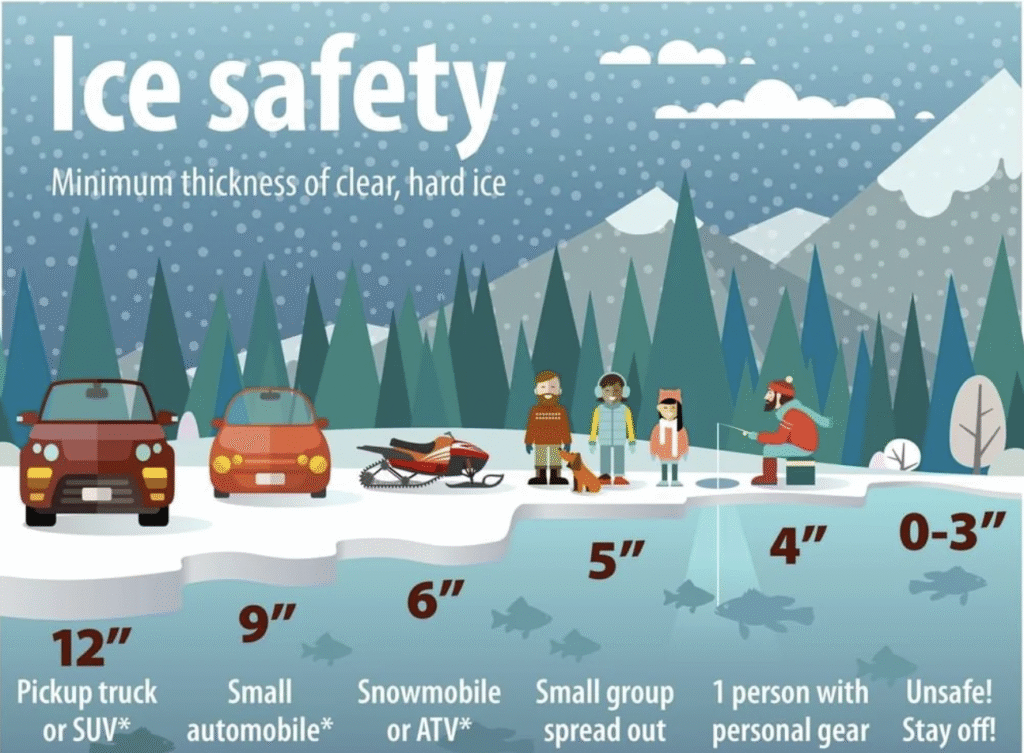
As a general guideline, most snowmobiles require at least five to six inches of clear, solid ice. More is always better. Slush ice, honeycombed ice, or ice covered by deep snow can be much weaker than it appears.
Before heading out, riders should always check local ice reports, talk to lake residents, bait shops, or snowmobile clubs, and look for posted warnings. Early and late season riding demands extra caution, as ice conditions can change quickly.
Even mid-winter, it is smart to follow established tracks and marked routes whenever possible. These paths are often used because they have been checked repeatedly by other riders.
Essential Gear for Riding on Frozen Water
Snowmobiling on lakes and ponds calls for a few extra safety considerations. Ice picks worn around the neck can be invaluable if a rider ever needs to pull themselves out of the water. A flotation snowmobile suit or jacket adds another layer of protection.
Carrying a throw rope, a small ice chisel, or even a spud bar can help assess ice thickness if there is any doubt. Many experienced riders also keep their phone in a waterproof case and let someone know their planned route and return time.
Riding with others is always safer than riding alone, especially on frozen water.
Respecting Speed, Space, and Other Riders
The open nature of frozen lakes can tempt riders to push their speed. While it is fun to open up the throttle, visibility, stopping distance, and other riders must always be considered.
On busy lakes, slower riders, ice fishermen, skaters, and walkers may all be sharing the same space. Maintaining a safe distance and moderating speed around others is critical.
Snowmobilers should also be aware of pressure ridges, ice heaves, and refrozen cracks. These features can be hard to see, especially at higher speeds or in flat light conditions.

Environmental Responsibility Matters
Frozen lakes and ponds are living ecosystems, even in winter. Snowmobilers play a role in protecting them.
Avoid spinning tracks aggressively, which can damage ice surfaces and contribute to slush pockets. Do not litter, and be mindful of fuel spills when stopping on the ice. A small leak or careless refueling can have an outsized impact on water quality.
Sticking to established routes helps protect sensitive shoreline areas, vegetation, and wildlife habitats. Many lake associations and snowmobile clubs work together to maintain responsible access, and riders benefit directly from these efforts.
Local Rules and Lake Etiquette
Not every lake or pond allows snowmobiling, and rules can vary by town, state, or even by specific body of water. Some areas restrict riding near shorelines, docks, or swimming areas. Others may have speed limits or designated crossings.
Before riding, it is important to know the local regulations. Respecting posted signs and private property boundaries ensures continued access for everyone.
Good etiquette also extends to noise. While snowmobiles are inherently loud, being considerate near homes, fishing areas, and gatherings goes a long way toward maintaining positive relationships with lakefront communities.
The Unique Joy of Winter Lake Riding
There is something deeply satisfying about riding across a frozen lake at sunrise or sunset. The light reflects off the snow and ice, the air feels sharper, and the world seems quieter and more expansive.
For many riders, these moments become lasting memories. They are reminders that snowmobiling is not just about speed or miles covered, but about experiencing winter landscapes in a way few others can.
Frozen lakes and ponds offer a front-row seat to winter’s beauty, from snow-dusted shorelines to distant mountain silhouettes and open skies.

Ride Smart So the Tradition Continues
Snowmobiling on frozen lakes and ponds is a privilege, not a guarantee. Access depends on safe practices, environmental stewardship, and mutual respect between riders and lake communities.
By understanding ice conditions, riding responsibly, following local rules, and respecting the natural environment, snowmobilers help ensure that these winter playgrounds remain open and enjoyable for generations to come.
Winter will always find ways to challenge us. Snowmobiling across frozen water reminds us why we embrace it in the first place: freedom, adventure, and the unmatched beauty of a lake at rest beneath the snow.
Posted by Scott Freerksen “The Lake Guy”