

Lakefront homes are emotional properties. Buyers are not just shopping for square footage or bedroom count. They are buying early mornings on the dock, sunsets over the water, and a lifestyle that feels different from everyday living. Great lake home photography must capture that feeling while still presenting the home accurately and professionally. Poor photos can make even the best lakefront property feel flat. Done right, photography attracts the right buyers and sets expectations correctly from the very first click.
Below is a practical guide to photographing a lakefront home in a way that highlights both the property and the waterfront lifestyle buyers are searching for.
Start With the Lifestyle, Not Just the House
Lakefront buyers want to imagine themselves living there. Before picking up a camera, walk the property and identify the moments that define the experience. This might be coffee on the deck overlooking the water, kayaks resting at the shoreline, or a quiet dock at sunset.
Capture shots that suggest how the property is used, not just what it looks like. A chair positioned to face the lake, a fire pit with the water in the distance, or a path leading to the shore all help buyers emotionally connect. Lifestyle details matter because they separate serious lake buyers from casual browsers.

Time Your Shoot Around the Water and the Light
Light is everything in lakefront photography. The best time to shoot is often early morning or late afternoon when the sun is lower and reflections on the water are softer. Midday sun can create harsh glare, blown-out highlights, and dark shadows, especially when shooting toward the lake.
Morning light is ideal for east-facing properties and often produces calm water that reflects the sky beautifully. Late afternoon and early evening work well for west-facing homes and deliver dramatic sunsets that lake buyers love. Golden hour images tend to perform exceptionally well online because they evoke warmth and tranquility.
If possible, schedule the shoot when the water is still. Wind creates choppy surfaces that distract from the scene. Calm water signals peace and relaxation, which is exactly what buyers want to feel.
Always Show the Water, Even Indoors
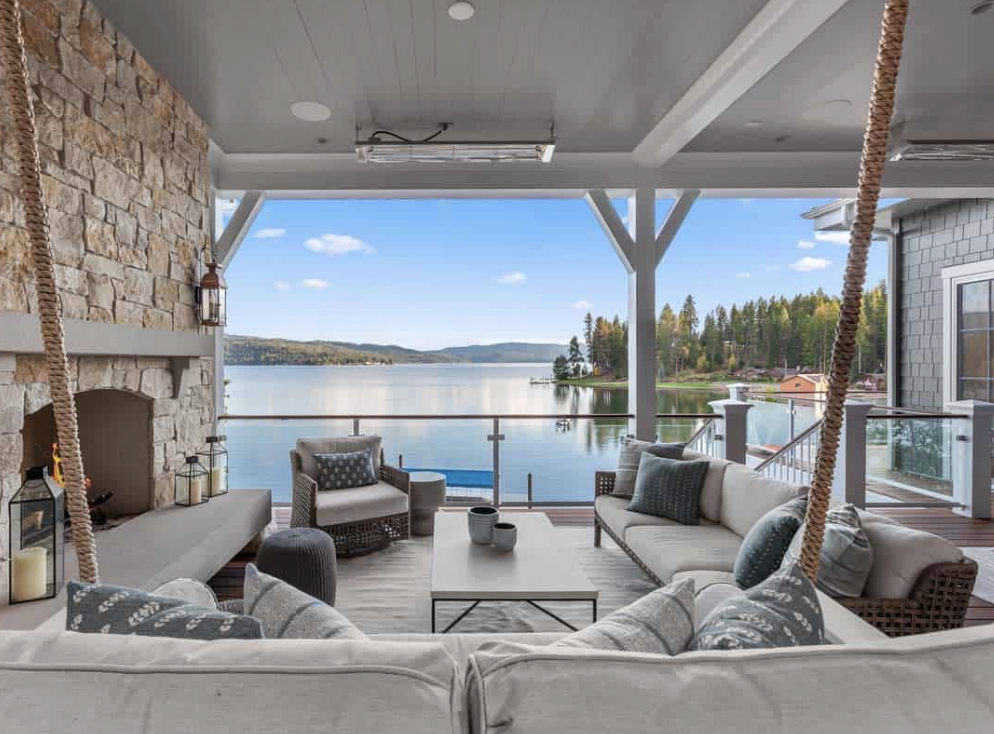
One of the biggest mistakes in lakefront photography is failing to connect the interior spaces to the water. Buyers expect lake views from inside the home, even if they are subtle.
When photographing interior rooms, position the camera so windows frame the lake whenever possible. You may need to adjust exposure carefully so the interior does not appear too dark while the water remains visible. This is where professional photography techniques or HDR blending can be extremely helpful.
Do not overdo it, though. The goal is realism. Buyers should see the lake naturally, not as an artificially bright blue patch pasted into every window.
Highlight the Shoreline, Not Just the View
Different buyers value different types of waterfront. Some want sandy beaches for swimming. Others want deep water access for boating. Some care most about privacy and natural shoreline.
Capture clear images of the shoreline itself. Show the water entry, dock, boat lift, retaining walls, or natural vegetation. Include wide shots from the water looking back at the house if access allows. These photos help buyers immediately understand how the waterfront functions.
If the property includes deeded or shared access rather than direct frontage, photograph the access point clearly and honestly. Transparency builds trust and attracts buyers who are actually a good fit.
Use Elevation and Angles Thoughtfully
Lakefront properties benefit from a variety of angles. Ground-level shots establish scale and accessibility. Elevated shots, when permitted and safe, provide context and show how the house sits relative to the water.
Drone photography can be extremely effective when used properly. Aerial images should show lot boundaries, distance to the shoreline, dock placement, and surrounding landscape. They should complement, not replace, traditional photography.
Avoid extreme angles that distort the home or make the lot appear misleading. Buyers quickly lose confidence when photos feel exaggerated.
Stage With the Lake in Mind
Staging for a lakefront shoot is different from staging a suburban home. The goal is to enhance the connection to the outdoors, not clutter it.
Inside, keep furnishings neutral and draw attention toward windows and doors facing the lake. Outside, arrange furniture to face the water whenever possible. A pair of chairs angled toward the lake communicates how the space is meant to be enjoyed.
Remove distractions such as hoses, kayaks in disrepair, mismatched furniture, or unused yard equipment. Lake buyers are drawn to simplicity and serenity. The cleaner the scene, the stronger the emotional pull.

Capture Seasonal Context Honestly
Lakefront markets can be highly seasonal, and buyers often shop online long before the peak season arrives. If the home is photographed in winter or early spring, focus on angles that still highlight the water and shoreline, even if trees are bare.
If the shoot takes place in summer, take advantage of lush greenery and active water scenes. A paddleboard on the water or a boat tied at the dock can signal possibility, but keep it subtle.
The goal is not to mislead, but to help buyers understand how the property lives throughout the year. Including a mix of seasonal images can be helpful when available.
Choose Quality Over Quantity
More photos are not always better. A strong lakefront listing tells a visual story that flows logically from approach, to house, to water, to lifestyle spaces.
Select images that each serve a purpose. Lead with the strongest lake-facing exterior shot. Follow with images that show approach, interior connection to the water, shoreline features, and outdoor living spaces. Every image should earn its place.
Poor or repetitive photos dilute the impact of the best ones. Remember that buyers often scroll quickly. First impressions matter.
Keep Editing Natural and Honest
Buyers expect professional-quality images, but they also expect accuracy. Over-saturated skies, unrealistic water color, or over-sharpened interiors can backfire and lead to disappointment at showings.
Edit for clarity, balance, and warmth. Correct distortion. Adjust exposure thoughtfully. Let the lake look like the lake, not a postcard fantasy. Trust builds when photos match reality.

Attracting the Right Buyers Starts With the Right Visual Story
The best lakefront photography does one thing extremely well. It attracts buyers who already understand and value the lake lifestyle. These buyers show up more excited, more informed, and more prepared.
When photography captures the relationship between the house and the water, it filters out the wrong audience and speaks directly to the right one. That leads to better showings, stronger emotional connections, and ultimately, better offers.
A lakefront home is more than a structure on the water. Your photography should reflect that story from the very first image.
Posted by Scott Freerksen “The Lake Guy”