
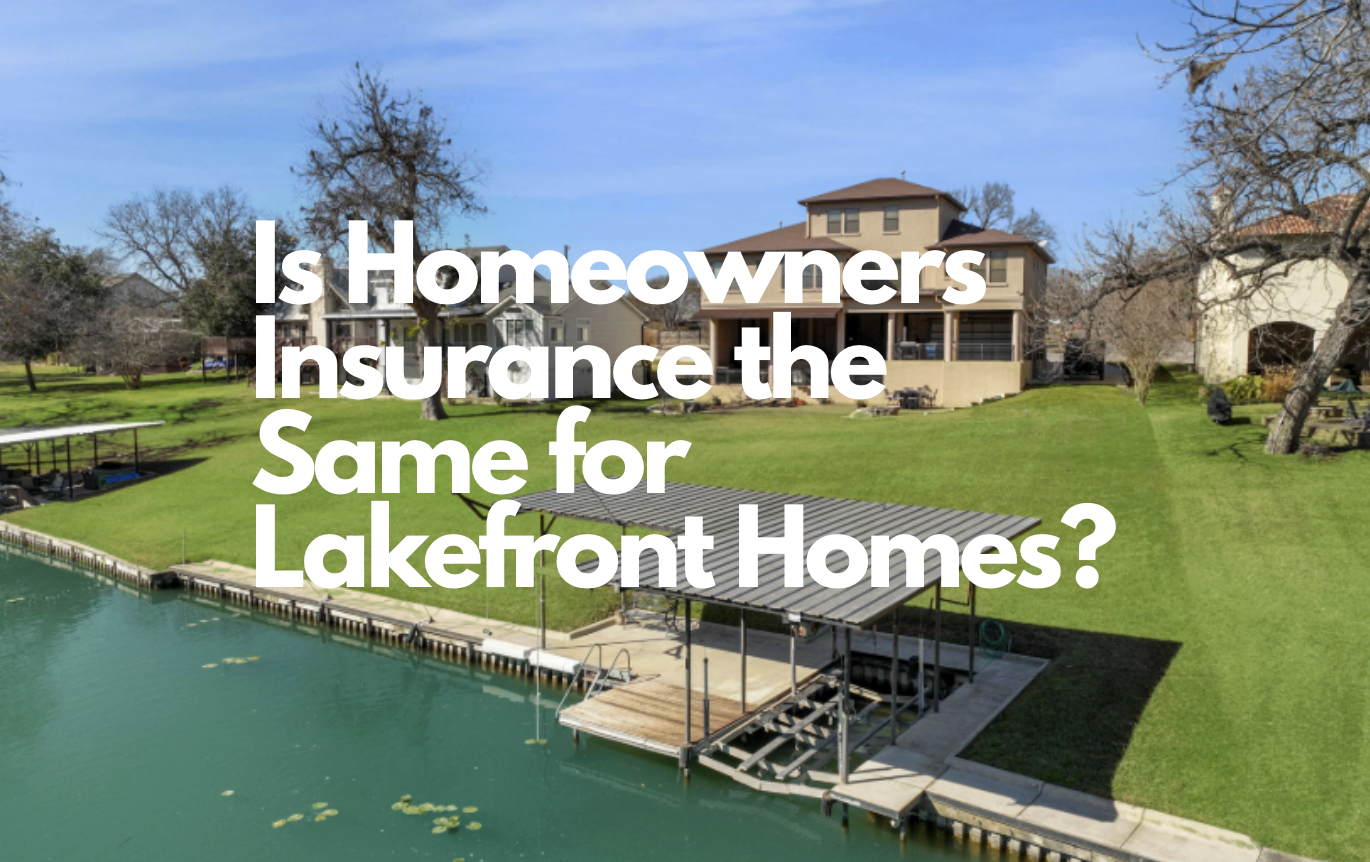
For many buyers, owning a lakefront home represents the ultimate lifestyle upgrade. Early morning paddles, sunset views from the dock, and weekends with friends on the water make lake living incredibly appealing. But along with the lifestyle benefits comes a practical question that many buyers overlook during the excitement of purchasing a waterfront property.
Is homeowners insurance the same for lakefront homes?
The short answer is no. While lakefront homes can be insured under a standard homeowners policy, they often require additional coverage, higher liability limits, and specialized riders because of the unique risks associated with living on the water. Understanding these differences can help buyers avoid unpleasant surprises and ensure their lake property is properly protected.

Standard Homeowners Insurance: The Basics
A typical homeowners insurance policy is designed to protect against common risks such as:
- Fire
- Theft
- Storm damage
- Vandalism
- Liability if someone is injured on your property
These policies usually cover four primary areas:
- The dwelling (the home itself)
- Other structures (garages, sheds, fences)
- Personal belongings
- Liability protection
For most inland homes, this standard coverage works well because the primary risks are relatively predictable. However, waterfront homes introduce additional exposures that traditional policies may not fully address.
Why Lakefront Homes Are Different
Insurance companies evaluate risk when pricing policies. Homes located directly on the water present unique challenges that insurers must consider.
Higher Exposure to Weather and Water Damage
One of the biggest differences is simply proximity to water. Homes on lakes are exposed to environmental factors that inland properties rarely face, including:
- High winds off open water
- Wave action and shoreline erosion
- Flooding or rising water levels
- Moisture and humidity that accelerate wear on building materials
Because of these factors, insurers often classify waterfront homes as higher risk, which can lead to higher premiums and stricter coverage requirements.
In some cases, properties located within a few hundred feet of open water may see premiums increase significantly due to these additional risks.
Flood Insurance Is Usually Separate
One of the biggest misconceptions among waterfront buyers is assuming their homeowners policy covers flooding.
It typically does not.
Standard homeowners insurance policies almost always exclude flood damage caused by rising water from lakes, rivers, or heavy rain events.
Instead, flood protection usually requires a separate flood insurance policy, often through the National Flood Insurance Program (NFIP) or a private insurer.
If your lakefront home is located in a federally designated flood zone, your mortgage lender will likely require flood insurance as a condition of the loan. Even if it is not required, many lakefront experts still recommend it because water damage can be extremely costly.

Docks, Boathouses, and Other Structures
Lakefront properties often include features that inland homes simply do not have, such as:
- Docks
- Boat lifts
- Boathouses
- Seawalls
- Detached bunkhouses or guest cottages
These structures are not always fully covered under a standard homeowners policy. Some may fall under the “other structures” category, but the coverage limits may be insufficient.
For example, damage to a dock caused by storms or ice may require additional endorsements or specialized waterfront coverage.
Because these structures are integral to the lake lifestyle, it is important for homeowners to verify that they are adequately insured.
Watercraft Are Not Covered by Homeowners Insurance
Another common misconception is that homeowners insurance covers boats or jet skis.
In reality, most policies provide little or no coverage for motorized watercraft. If you own a boat, personal watercraft, or other recreational vehicles used on the lake, you will likely need separate policies to insure them.
These additional policies protect against:
- Boat damage
- Theft
- Liability from boating accidents
- Injuries to passengers
Considering how central boating is to lake living, this additional insurance is often essential.
Liability Risks Are Higher on the Water
Lakefront homes also come with increased liability exposure.
Think about how people interact with a typical lake property:
- Swimming from the dock
- Diving into the water
- Boating or jet skiing
- Water skiing or tubing

Hosting guests around the lake
These activities carry higher risks than a typical backyard gathering. Injuries related to drowning, diving accidents, or boating incidents can result in significant legal liability.
For this reason, many insurance professionals recommend umbrella liability policies for lakefront homeowners. These policies extend liability protection beyond the limits of your standard homeowners insurance and can provide $1 million or more in additional coverage.
Vacation Home vs Primary Residence Insurance
Another factor that can impact insurance costs is how the lake property is used.
Many lake homes serve as second homes or seasonal retreats, and insurers often treat them differently from primary residences.
Why? Because vacation homes are often unoccupied for long periods. This increases risks such as:
- Undetected water leaks
- Storm damage that goes unnoticed
- Break-ins or vandalism
Because of these factors, insurance for second homes can sometimes cost more than insurance for a primary residence.
Renting Your Lake Home Adds Another Layer
In today’s market, many lakefront owners offset ownership costs by renting their property on platforms like Airbnb or VRBO.
While this can be a great strategy, it also changes the insurance requirements.
Once a home is used as a rental property, insurers may require:
- Short-term rental insurance
- Landlord insurance
- Additional liability coverage
Standard homeowners policies typically do not cover commercial or rental activity without specific endorsements.

What Lakefront Buyers Should Do
If you are considering purchasing a lakefront home, there are several smart steps to take before closing.
- Work with a knowledgeable insurance agent
- Choose an agent who understands waterfront properties and the specific risks associated with them.
- Review flood maps
- Check whether the property lies within a FEMA flood zone and whether flood insurance will be required.
- Evaluate additional structures
- Confirm that docks, boat houses, and shoreline improvements are properly insured.
- Consider umbrella liability coverage
- Higher liability limits can protect your assets if an accident occurs.
- Compare multiple insurance quotes
- Different insurers evaluate waterfront risk differently, so rates and coverage can vary widely.
The Bottom Line
Homeowners insurance for lakefront homes is not exactly the same as insurance for inland properties. While a standard policy provides a starting point, waterfront homes typically require additional coverage due to their exposure to water, weather, and recreational activity.
From flood insurance to dock coverage to increased liability protection, lakefront homeowners should take a closer look at their policies to ensure they are fully protected.
The good news is that with the right insurance strategy in place, you can enjoy everything lake living has to offer with peace of mind.
And when the sun is setting over the water and the dock lights are glowing, knowing your investment is properly protected is one less thing you need to worry about.
Posted by Scott Freerksen “The Lake Guy”