
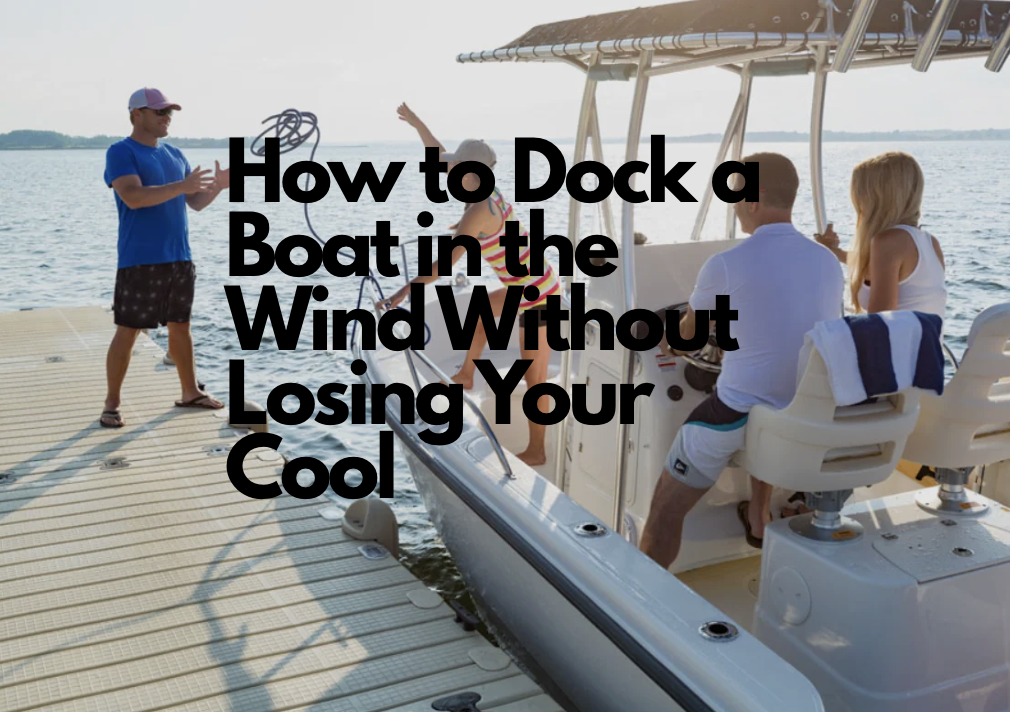
There’s nothing quite like a calm sunset cruise on the lake...until it’s time to dock in a stiff crosswind with a crowd watching from shore. Even experienced boaters can feel the pressure when the wind starts pushing the boat around like a leaf on the water. The good news is that docking in the wind is a skill that can absolutely be learned with patience, preparation, and practice.
The biggest mistake many boaters make is fighting the wind emotionally instead of working with it strategically. Wind is predictable. Once you understand how your boat reacts and how to approach the dock correctly, docking becomes far less stressful and much more controlled.
Understand What the Wind Is Doing
Before you even think about approaching the dock, stop for a moment and study the conditions. Look at flags, tree movement, ripples on the water, or drifting debris. Determine which direction the wind is pushing your boat.
Wind affects different boats differently. Pontoon boats, wake boats, and cruisers with high sides act like giant sails and can drift quickly. Smaller fishing boats sit lower in the water and may react differently. Understanding your boat’s tendencies is half the battle.
The key is simple: never rush the approach.
Prepare the Boat Before You Approach
One of the most common docking mistakes happens before the docking even starts. Scrambling for dock lines and fenders while drifting toward the dock creates panic and chaos.
Before entering the docking area:
Put out your fenders
Prepare dock lines
Assign responsibilities to passengers
Remove distractions
Slow down
Passengers should know exactly what their job is before you approach. Screaming instructions at the last second rarely ends well. Also remind passengers never to try stopping the boat with their hands or feet between the dock and the boat.
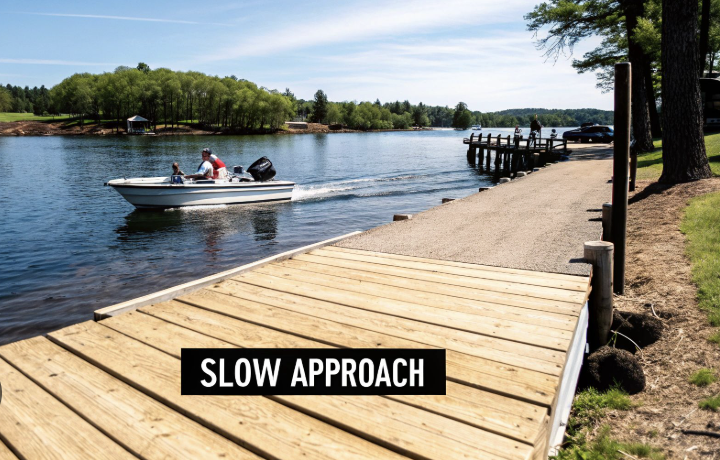
Approach Slower Than You Think
Wind docking is not about speed. It’s about control.
A slow-moving boat gives you more time to react and make adjustments. Most docking accidents happen because someone came in too fast and tried correcting too late.
Use short, controlled bursts of throttle instead of constant acceleration. Modern boats respond much better to brief corrections than aggressive steering movements.
A good rule of thumb is this: approach the dock only as fast as you’re willing to hit it.
Docking With the Wind Pushing You Toward the Dock
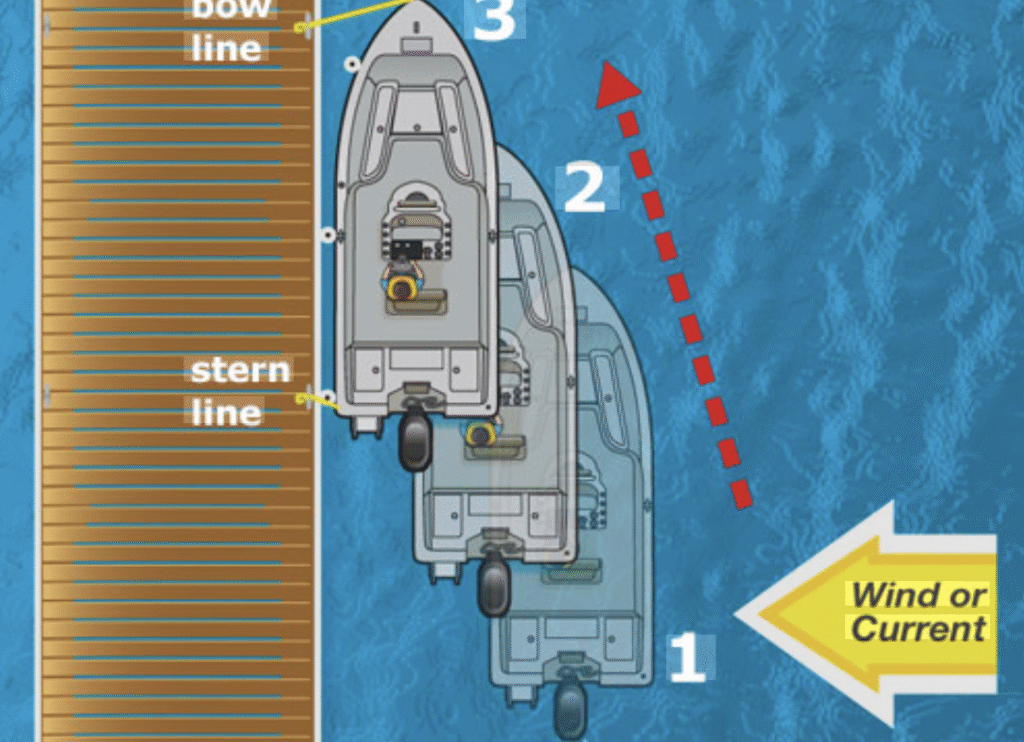
This is generally the easier scenario because the wind helps keep the boat close once you arrive.
Approach the dock at a shallow angle, usually around 20 to 30 degrees. Keep the boat under control with small steering corrections and gentle throttle adjustments.
As the boat nears the dock:
- Shift briefly into neutral
- Let the wind gently push the boat in
- Use short reverse bursts if needed to slow momentum
- Secure the bow line first
- Once the first line is secured, the boat becomes much easier to control.
Docking With the Wind Pushing You Away From the Dock
This is where things get tricky.
When the wind pushes you away from the dock, hesitation becomes your enemy. If you approach too slowly, the wind will drift you away before you can secure a line.
In this situation:
- Approach at a slightly steeper angle
Maintain just enough momentum for steering control
Aim slightly upwind
Commit to the approach confidently
The goal is to touch the dock briefly and secure a line immediately before the wind pushes you back out.
This is where preparation matters most. Your crew should already have the dock line ready to secure.
Many experienced boaters prefer approaching into the wind whenever possible because it provides better control and braking power.
Use Reverse to Your Advantage
Many new boaters underutilize reverse gear when docking. Reverse is not just for stopping. It’s an important steering tool.
A brief shift into reverse can:
- Slow momentum
Pivot the stern
Prevent drifting
Correct alignment
Practice learning how your specific boat reacts in reverse. Some boats pull harder to one side due to prop walk or prop rotation. Understanding these quirks ahead of time builds confidence.
Don’t Fight the Wind Too Aggressively
One of the worst things you can do is overcorrect. Large steering movements and aggressive throttle bursts usually make docking harder.
One of the worst things you can do is overcorrect. Large steering movements and aggressive throttle bursts usually make docking harder.
Smooth corrections work better.
Think of docking like parallel parking a car on ice. Sudden movements create more instability. Calm, small adjustments maintain control.
Experienced captains often appear calm because they are constantly making tiny corrections instead of dramatic ones.
Practice Away From the Dock First
The best time to learn docking skills is not when spectators are watching at the marina on a busy Saturday afternoon.
Practice in open water first.
Use buoys, imaginary docks, or empty shoreline areas to practice:
- Slow-speed maneuvering
Reverse steering
Pivoting
Wind compensation
Throttle control
Confidence comes from repetition.
Windy Conditions Are Part of Lake Life
Every lakefront boater eventually faces windy docking situations. Even seasoned captains occasionally need a second attempt. There’s no shame in circling around and resetting your approach.
The most important thing is staying calm.
Passengers take emotional cues from the captain. If you remain composed and patient, docking becomes far safer and more manageable.
And remember…nobody at the marina remembers the perfect docking jobs. But everyone remembers the captain who stayed calm, laughed it off, and safely tried again.
That’s real boating experience.
Final Thoughts
Learning how to dock a boat in the wind is one of the most valuable boating skills you can develop. Like anything in boating, confidence comes with experience. The more time you spend practicing in different conditions, the more natural it becomes.
Start slow. Stay prepared. Respect the wind. And don’t let one difficult docking attempt ruin a great day on the lake.
Because lake life isn’t about perfection. It’s about enjoying the lifestyle, learning new skills, and making memories on the water.
As I always say:
“Buyers aren’t just buying a house…they’re buying the lifestyle.”
And learning to confidently handle your boat is part of that lifestyle.
Posted by Scott Freerksen “The Lake Guy”