
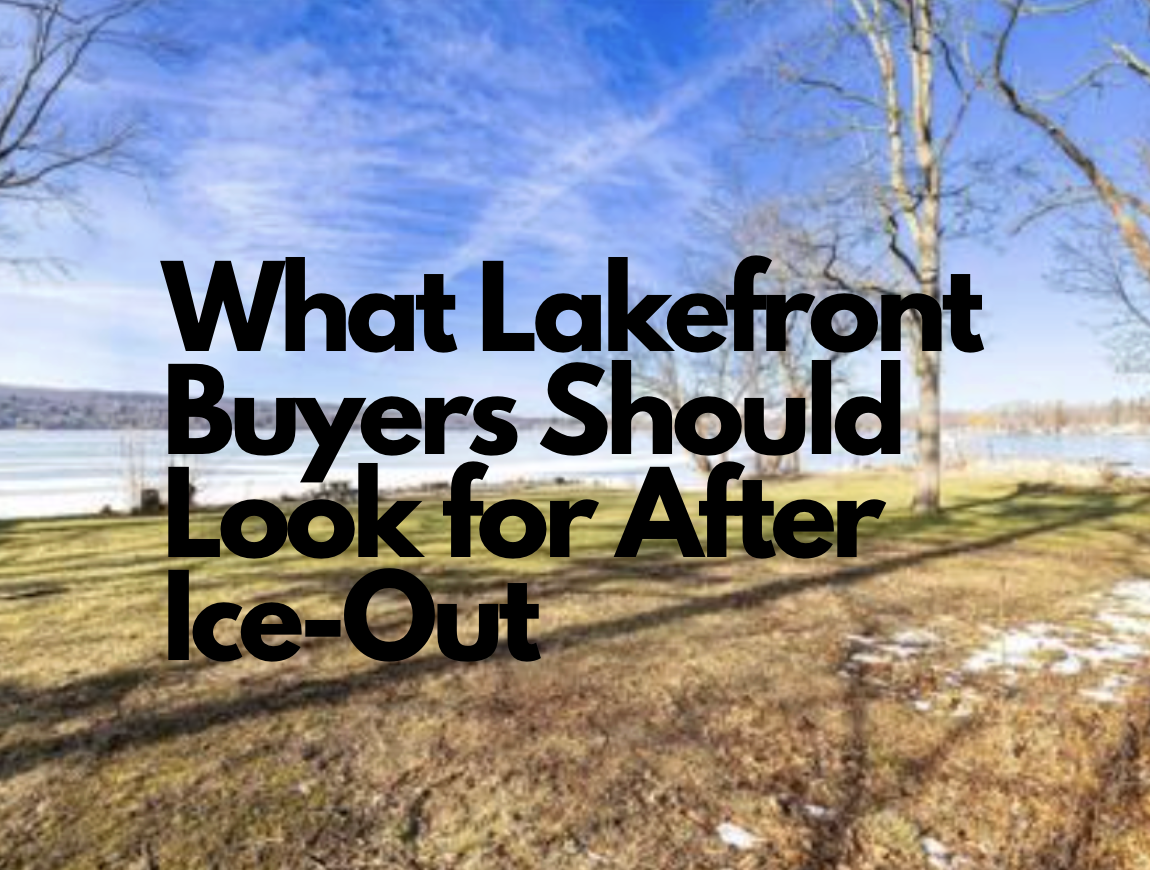
For lake lovers, one of the most anticipated moments of the year is ice-out. After months of frozen water, the lake finally opens up again. Boats will soon return, docks will be installed, and another lake season is just around the corner.
But for lakefront buyers, the weeks immediately following ice-out offer something even more valuable. They provide a rare opportunity to evaluate the true condition of both the lake and the property. Many issues that remain hidden in summer become visible during this transitional period.
If you are considering buying lakefront property this year, the weeks after ice-out may be the best time to tour homes and assess what you are really buying.
Here are the key things experienced lakefront buyers look for once the ice disappears.
Shoreline Stability and Erosion
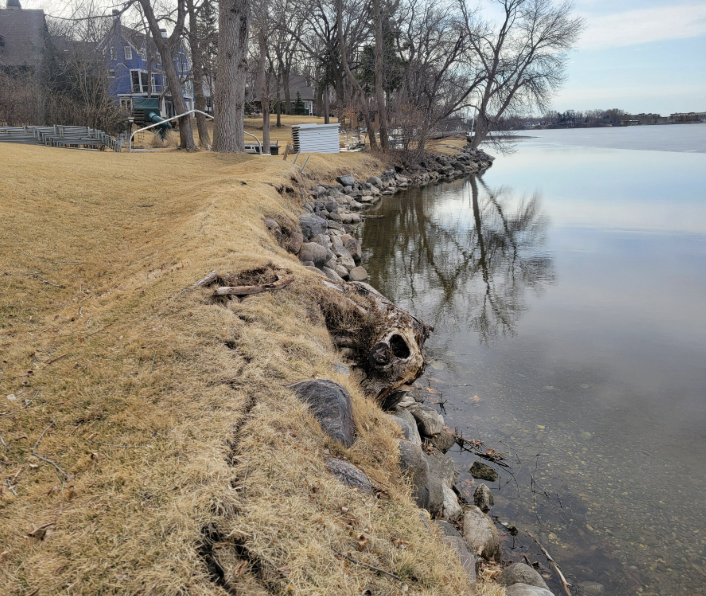
Winter ice can be tough on shorelines. As ice expands, shifts, and breaks apart, it can push against the shore with tremendous force. This process can loosen rocks, damage retaining walls, or slowly erode sections of the shoreline.
After ice-out, take time to walk the shoreline carefully. Look for signs of:
- Loose stones or displaced riprap
- Soil erosion near the waterline
- Collapsed retaining walls
- Exposed roots from shoreline trees
A stable shoreline protects both the land and the lake. If erosion is visible, it may require reinforcement through rock placement, natural buffers, or professional shoreline stabilization.
Condition of Docks and Boat Lifts
Docks and lifts often take the brunt of winter damage. Even if they were removed before freeze-up, the shoreline structures they connect to may still be affected.
In early spring, inspect:
- Dock anchors and connection points
- Pilings or posts that may have shifted
- Boat lift mechanisms and cables
- Electrical connections for powered lifts
If a dock remained in the water during winter, examine it closely for bent supports or structural damage caused by shifting ice sheets.
These repairs are common and usually manageable, but they should be factored into your evaluation of the property.
Water Clarity and Lake Health
The early spring period provides a clear snapshot of a lake’s health. Water clarity, color, and odor can reveal important information.
Look for:
- Clear water versus murky or brown coloration
- Excess algae growth early in the season
- Unusual odors that may suggest nutrient issues
- Sediment washing into the lake from nearby runoff
Many lakes publish annual water quality reports through local lake associations or town conservation departments. Reviewing these reports alongside what you see on site can give you a fuller picture of the lake’s condition.
A healthy lake typically shows improving clarity as spring progresses.
Runoff and Drainage Patterns
One of the biggest advantages of viewing lake property right after ice-out is the opportunity to see how water moves across the land.
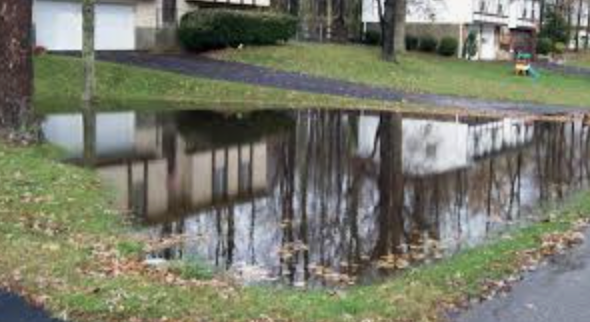
Spring snowmelt and rain can reveal drainage problems that might not be obvious during dry summer months.
Watch for:
- Water pooling near the house
- Runoff channels cutting through the yard
- Soil washing toward the lake
- Driveways that become muddy or rutted
Good drainage is important for protecting both the home and the shoreline. Proper grading, natural vegetation buffers, and thoughtful landscaping help keep water moving in the right direction.
Septic System Performance
Lakefront homes typically rely on septic systems, and spring conditions can reveal how well those systems function.
After snowmelt, saturated soils place additional pressure on septic systems. Warning signs may include:
- Wet spots or standing water above the leach field
- Unusual odors near the septic area
- Lush patches of grass growing unusually fast
These indicators do not automatically mean there is a problem, but they should prompt further inspection by a qualified septic professional.
Because septic systems are closely regulated near lakes, understanding the system’s age, design, and maintenance history is essential when evaluating any lakefront property.
Tree Damage and Fallen Limbs
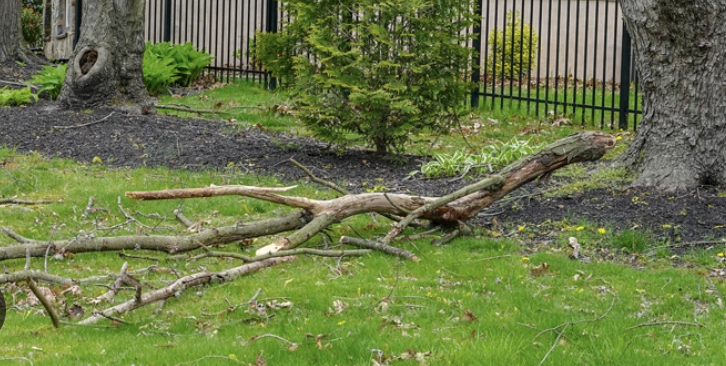
Winter storms often leave their mark on shoreline properties. Ice, wind, and heavy snow can break branches or weaken trees.
During a spring showing, scan the property for:
- Broken or hanging limbs
- Trees leaning toward structures
- Fallen branches near the shoreline
- Trees with exposed or damaged roots
Healthy trees enhance privacy, shade, and the overall lakefront setting. However, unstable trees may require trimming or removal to prevent future damage to structures or docks.
Shoreline Vegetation and Natural Buffers
Many states and towns encourage natural vegetation along the shoreline because it helps protect water quality and prevent erosion.
After ice-out, examine the shoreline buffer carefully. Look for:
- Healthy native plants along the water’s edge
- Areas where soil is exposed and vulnerable
- Signs of invasive plants beginning to spread
Natural buffers filter runoff before it reaches the lake and help maintain the long-term health of the water. Buyers should understand both the benefits and any local regulations governing shoreline vegetation.
Boat Access and Water Depth
Early spring can also help buyers understand how easily boats can access the property.
During a showing, observe:
- Water depth at the end of the dock
- Underwater rocks or obstacles near shore
- The slope of the lake bottom
- Ease of launching paddleboards, kayaks, or small boats
Water levels are often higher in spring due to snowmelt. While levels may drop later in the season, spring conditions can still provide helpful insight into how the shoreline functions for boating and swimming.
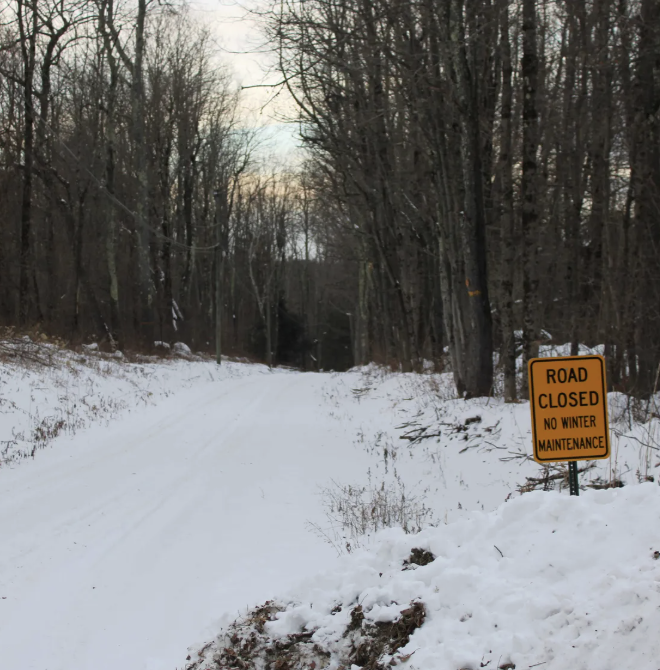
Road Access After Winter
Finally, the weeks following ice-out can reveal how well the property handles winter conditions.
Look closely at:
- Driveway surfaces that may have developed potholes or ruts
- Culverts that handle runoff from the road
- Steep driveways that could be challenging in icy weather
Reliable access is an important part of lake living, especially for year-round homes.
Why Experienced Buyers Love the Ice-Out Season
While summer may be the most beautiful time to visit a lake, the weeks after ice-out are often the most informative.
Spring exposes details that are easy to overlook during the peak lake season. Shorelines show their true condition, drainage patterns become visible, and docks and waterfront structures reveal how well they handled the winter.
For serious lakefront buyers, this information is incredibly valuable.
As Scott “The Lake Guy” Freerksen often tells buyers, the best time to understand a lakefront property is when the lake is just waking up from winter. What you see during those early weeks can tell you far more than a sunny summer afternoon.
By paying attention to these key details after ice-out, buyers can make more informed decisions and ensure the lake home they choose will deliver the lifestyle they are dreaming about for many seasons to come.
Posted by Scott Freerksen “The Lake Guy”