

You tour a lake house in November. The dock from the listing photos is stacked beside the garage, and you’re already picturing your boat tied up there. Then the seller mentions they’re taking the dock to their next house. Can they do that?
Sometimes. Whether the dock comes with the lake house depends on how it’s installed, who owns it, applicable law, and what the parties agree to in writing. If the dock is a big part of why you’re buying the house, settle two questions before you commit. What exactly comes with the property? And can you use it in that spot after closing?
When does a dock come with a lake house?
A dock built on permanent pilings and designed to stay in place year-round is more likely to be treated as a fixture, meaning it’s considered part of the real estate. Fixtures generally convey with the property unless the parties agree to exclude them and the exclusion can legally be carried out.
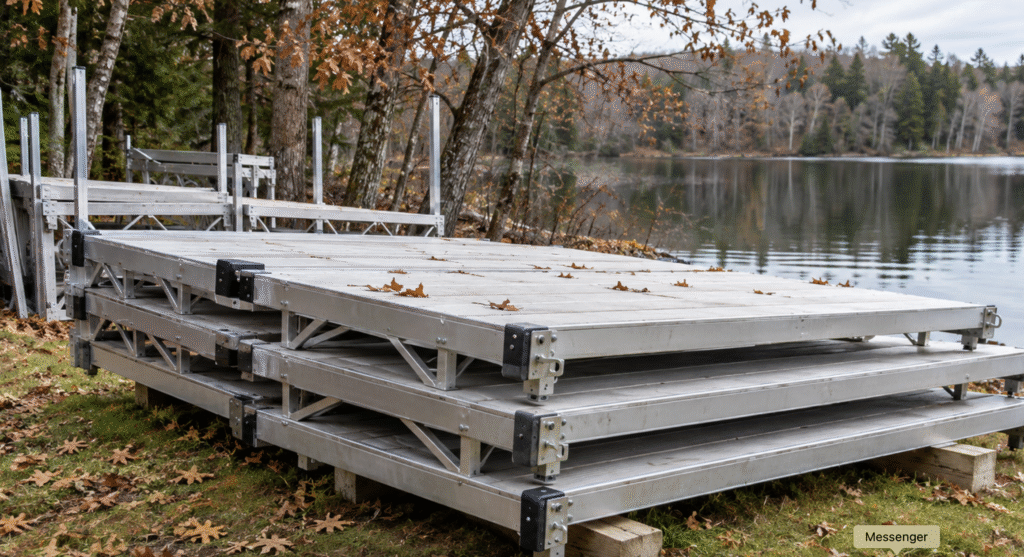
A seasonal aluminum dock designed to be pulled out every fall and moved to another property is more likely to be treated as personal property. The seller may be able to keep it, or you can negotiate to include it in the sale.
Between those examples are plenty of docks that are harder to classify. Think of a floating platform joined to a fixed pier by a hinged gangway, or a wood dock with removable decking and permanent supports. The ability to disconnect a section is one clue. How it was installed, how it fits the site, and whether it was intended to be permanent can also matter. Massachusetts case law, for example, weighs the circumstances surrounding installation, including the method and degree of attachment. If the classification is disputed, have your closing attorney review the installation and the signed agreement.
Massachusetts Supreme Judicial Court fixture decision
Spell out what “dock included” means
Imagine the seller agrees to leave the dock. You close in March and discover that the straight sections are behind the garage, but the wide platform at the end, the stairs, and the boat lift are gone. The seller may have had a very different idea of what “dock” meant.

Start with the offer and carry the terms into the final purchase and sale agreement
Ask your agent or closing attorney to describe what the seller will convey and what they’ll take. Reference a dated photo or sketch if the layout has several pieces. Walk through the details together:
- – Dock components. Count the straight sections and platforms. Identify the shore ramp or gangway, supports, floats, anchors, and connectors that go with them.
– Accessories. List the swim ladder, bumpers, boat lift, canopy, or other equipment you want included. Ask whether any of it is leased or belongs to a third party.
– Condition and delivery. Decide whether the dock will be installed at closing or delivered in seasonal storage. If it’s stored, agree on where it will be and who handles any agreed reinstallation.
– Exclusions and removal. If the seller is taking anything, agree on what stays, when removal will happen, and who will repair any damage to the remaining dock or shoreline.
At the final walkthrough, match the pieces to your agreed list. If a dock company stores the sections off-site, get the storage location and coordinate the release before closing. It’s much easier to sort out a missing gangway while everyone is still at the table.

Verify your right to keep the dock there
The equipment and the right to use it at that shoreline are separate parts of the deal. A seller might own a dock that sits under a permit or license with conditions. A dock described as “included” might also turn out to mean access to an association dock or use of an assigned boat slip. Ask whether the slip is deeded, assigned under association rules, or provided under a separate agreement. Review the deed, any recorded easement, and applicable association documents to see what passes to you.
For a private dock, request the permit or license and any approved plans. Compare the documented location and dimensions to what’s actually there. Ask the issuing authority whether anything must be filed when ownership changes and whether any restrictions apply to seasonal installation, repairs, or replacement. If the seller says the dock is grandfathered or exempt, ask what records support that and confirm the status with the authority that oversees the shoreline.
Rules can vary considerably
On waters regulated by the Tennessee Valley Authority, for example, Section 26a permits don’t transfer automatically. TVA requires new owners to notify it within 60 days of acquiring the property and submit an application for existing shoreline structures. TVA also checks whether the structures match what was previously approved. If an existing dock is essential to your plans, talk to your closing attorney about making the purchase contingent on confirming you can continue to use it. TVA shoreline permit FAQ
What if the seller wants to keep it?
If the seller plans to take a removable dock, you can ask to include it in the sale or negotiate a separate purchase with your agent and attorney. If it’s leaving, check what you can install before you price out a replacement. An identical layout might require approval, and a shorter dock may put your boat in water that’s too shallow later in the season. Get a local quote that includes delivery, installation, and any storage you’ll need. Then you can decide what the home is worth to you with the dock, or without it.
The best time to talk about the dock is while you’re standing on the shoreline, picturing how you’ll use it. If you’re exploring lake homes, a lakefront specialist can help you ask the right questions about the dock, the paperwork, and how the shoreline fits your plans.
Posted by Scott Freerksen “The Lake Guy”