
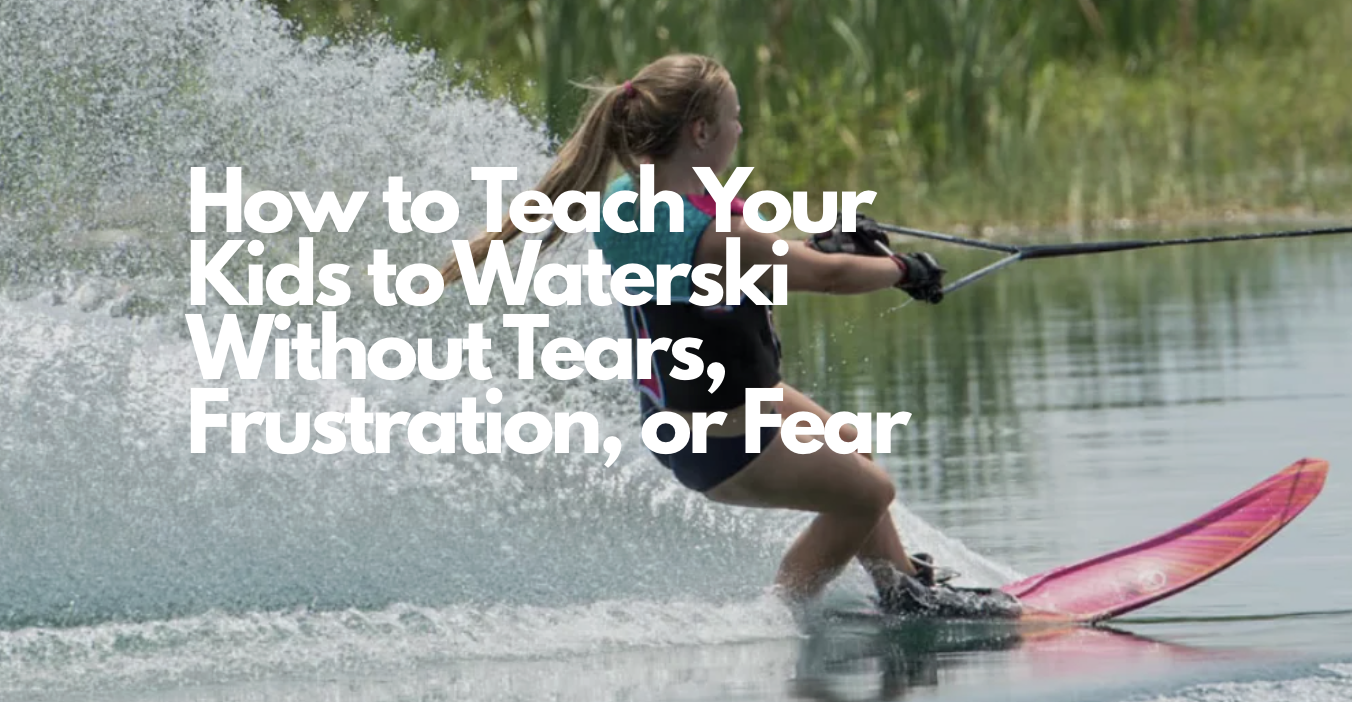
There are few moments in lake life more rewarding than watching your child pop up on a pair of skis for the very first time. The smile, the excitement, and the sense of accomplishment are memories that last forever. Better yet, waterskiing is one of those rare sports that can truly become a lifelong family tradition.
As someone who has spent decades around lakes and watched countless families make memories on the water, I’ve learned that the key to teaching kids to waterski isn’t strength, athleticism, or even balance. It’s confidence, patience, and making the experience fun from the very beginning.
Start Earlier Than You Think
Many parents assume children need to be eight or nine years old before attempting waterskiing. In reality, some kids can successfully start as young as four or five years old, provided they are comfortable in the water and physically capable of holding onto the handle.
The goal at this age isn’t performance. It is simply helping them become familiar with the equipment and allowing them to experience success in small steps.
Every child develops differently, so pay attention to their enthusiasm. If they are excited to try, that’s usually a good sign they are ready.
Use Proper Beginner Equipment
One of the biggest mistakes parents make is trying to teach children on adult-sized skis.
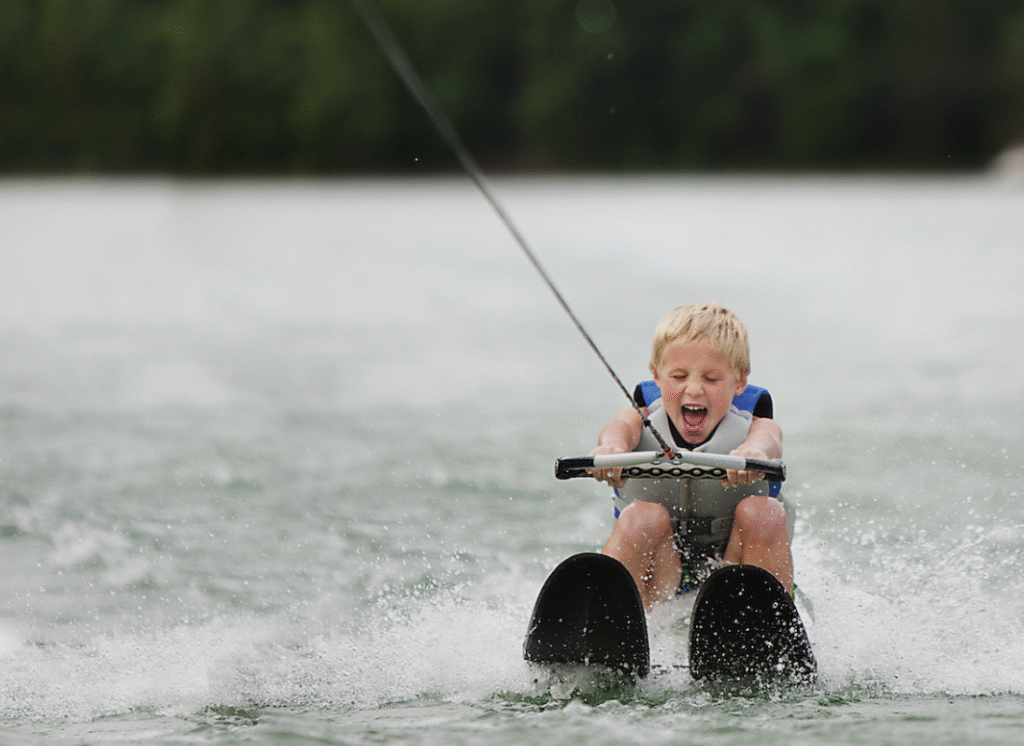
Kids learn much faster when they use equipment designed specifically for beginners. Training skis with stabilizing bars help keep the skis together and reduce wobbling. Some systems even include ropes attached to the ski tips to help maintain alignment during starts.
Smaller handles are also beneficial because they fit comfortably in a child’s hands and require less grip strength.
Investing in beginner equipment can dramatically shorten the learning curve and increase the likelihood that your child will want to try again.
Practice on Land First
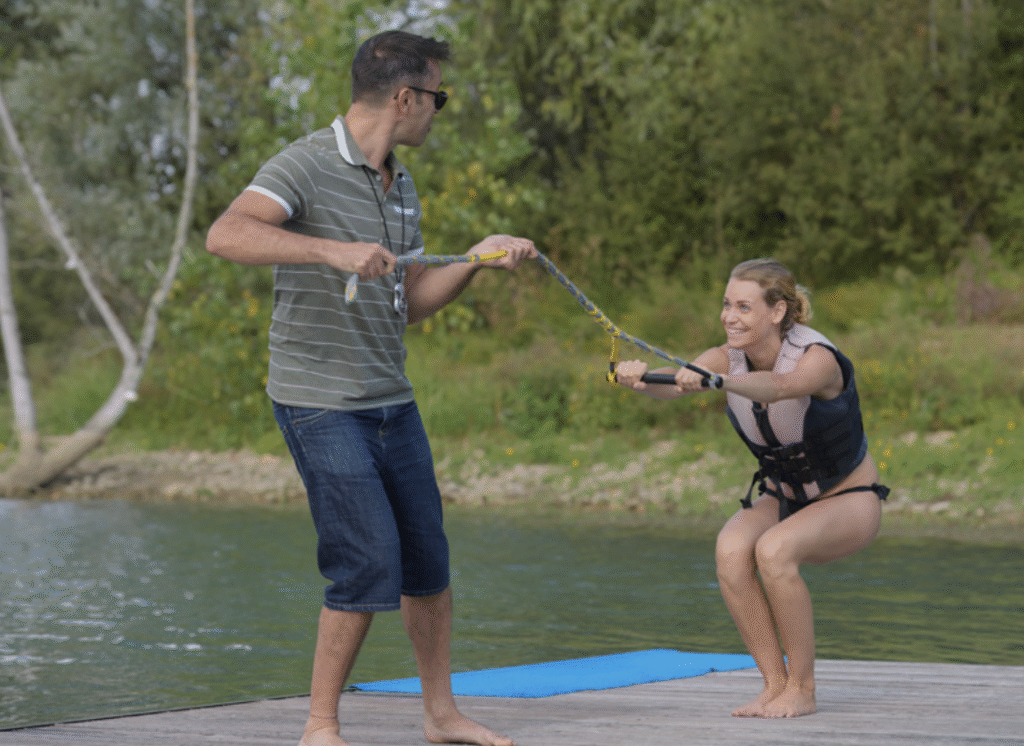
Before ever starting the boat engine, spend time practicing on shore.
Have your child sit on the grass or dock wearing their life jacket and skis while holding the handle.
Teach them three simple concepts:
- Knees bent
Arms straight
Let the boat pull you up
Explain that they do not need to stand up immediately. Instead, they should imagine sitting in an invisible chair and simply letting the boat do the work.
Many kids instinctively try pulling themselves toward the boat, which often causes them to fall forward. Practicing on land removes anxiety and helps them understand what to expect.
Pick the Right Conditions
Timing matters.
The ideal learning environment includes:
- Calm water
Minimal boat traffic
Warm temperatures
Little or no wind
Early morning or evening conditions
Glass-like water can make an enormous difference in a child’s confidence.
Busy holiday weekends with heavy chop and wakes from other boats are not the time to introduce skiing.
Children remember how their first experience felt. Smooth water almost always leads to a more enjoyable first attempt.
Keep Speeds Slow
Beginners do not need high speeds.
Many young children learn comfortably between 10 and 15 miles per hour.
The objective is stability, not excitement.
Gradually increase speed only when your child demonstrates comfort and control.
If they fall, reassure them immediately.
Every accomplished waterskier has spent plenty of time in the water.
The only failed attempt is the one they don’t want to repeat.
Consider a Boom or Training Device
If your boat has access to a ski boom, it can be one of the best teaching tools available.
A boom extends from the side of the boat and allows children to ski very close to an adult observer.
Benefits include:
- Immediate coaching
Reduced fear
Better balance
More successful starts
Faster learning progression
Many ski schools consider boom training the gold standard for introducing children to watersports.
If a boom isn’t available, training harnesses and beginner tow systems can also be effective.
Celebrate Small Wins
Success doesn’t have to mean skiing across the entire lake.
Celebrate milestones such as:
- Getting into the water comfortably
Holding the handle correctly
Floating in position
Standing for three seconds
Completing a short ride
Positive reinforcement goes a long way.
Avoid comparing siblings or friends.
Some children stand up the first time.
Others may need ten or fifteen attempts.
The most important thing is making sure they leave the lake smiling.
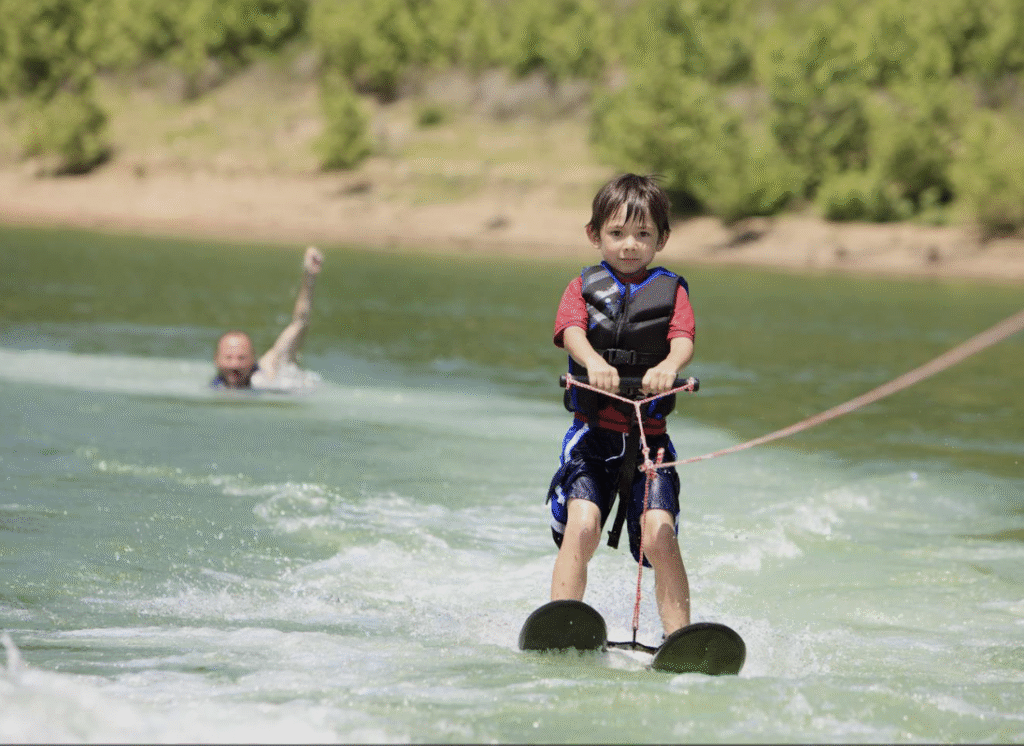
Make it a Family Tradition
Waterskiing can become much more than a summer activity.
For many families, it evolves into a cherished tradition that spans generations.
Kids who grow up skiing often gain:
- Better balance
Increased confidence
Stronger swimming skills
Healthy outdoor habits
A deeper appreciation for lake life
More importantly, they gain memories.
Years from now, they may not remember exactly how many times they fell, but they will remember Dad driving the boat, Mom cheering from the dock, grandparents taking pictures, and the feeling of finally skiing across the water on their own.
Those experiences become part of the fabric of family lake traditions.
The Best Advice of All
Perhaps the best advice I can give is this: don’t wait.
Children grow quickly, summers seem shorter every year, and opportunities to teach these kinds of skills don’t last forever.
Be patient.
Keep expectations low.
Laugh often.
Take lots of pictures.
And remember that the goal isn’t raising the next tournament champion. It’s helping your kids build a lifelong connection to the lake and creating memories they’ll someday pass down to their own children.
As I often say, some of the best investments you’ll ever make aren’t measured in dollars. They’re measured in sunsets, laughter, and watching your child proudly tell everyone, “I skied all by myself today.”
| Posted by Scott Freerksen “The Lake Guy” |